
So, you're curious about southern trap music? It's a sound that really took over, right? You've probably heard it everywhere, from your car radio to party playlists. It's got this distinct vibe that's hard to ignore. Let's break down how this whole southern trap thing got started, what makes it tick, and where it's headed. It's a pretty wild ride from its beginnings to what it is today.
Key Takeaways
- Southern trap music, born in Atlanta, is defined by its heavy 808 bass, fast hi-hats, and often raw lyrical content about street life and ambition.
- Pioneers like T.I., Gucci Mane, and Young Jeezy were crucial in shaping the early sound and popularizing the term 'trap'.
- The internet and mixtapes were huge for spreading southern trap, eventually catching the attention of major labels and leading to mainstream success.
- Today, southern trap continues to evolve, blending with genres like phonk and amapiano, and exploring new lyrical themes beyond its original scope.
- This sound hasn't stayed in the South; it's gone global, influencing subgenres like Latin trap, UK trap, and Afro trap, and impacting fashion and slang worldwide.
The Dirty South's Sonic Stampede: Where Southern Trap Was Born
Alright, let's talk about where this whole trap music thing really kicked off. Forget what you heard on the radio last week; we're going back to the source, the gritty streets of the Dirty South. This ain't just some random genre that popped up overnight. Nah, this sound was forged in the fires of real life, specifically in the vibrant, sometimes chaotic, heart of Atlanta.
Atlanta's Reign: The Birthplace of the Bounce
Seriously, if you're talking trap, you're talking Atlanta. This city is the undisputed OG, the place where the whole vibe was cooked up. It wasn't just about making beats; it was about capturing a feeling, a whole lifestyle. Think of it as the sonic blueprint for a generation. The energy here was different, a mix of struggle and swagger that just begged to be put to music. It's where the bounce in the beat first started to shake things up.
From 'Trap House' to Chart House: Coining the Sound
So, what's a 'trap house,' you ask? Well, it's slang for a spot where, uh, certain business goes down. And the music that came out of that? It was raw, unfiltered, and totally real. Artists started spitting rhymes about what they saw, what they lived. It wasn't always pretty, but it was honest. This sound, with its heavy bass and hypnotic rhythms, started creeping out of those 'trap houses' and onto mixtapes, then eventually, into the charts. It was a whole movement, and Atlanta was leading the charge.
Pioneers Who Paved the Way: T.I., Gucci, and Jeezy
We gotta give it up for the OGs who really put this sound on the map. You can't talk early trap without mentioning T.I. His album "Trap Muzik" back in 2003? That was a game-changer, basically coining the term and laying down the foundation for what was to come. Then you've got Gucci Mane, with his distinctive flow and undeniable presence, and Young Jeezy, whose gritty lyrics and powerful delivery made you feel every word. These guys weren't just making music; they were telling stories, and the world was finally ready to listen. They showed everyone how to turn street realities into chart-topping hits, proving that authenticity could conquer all. You can explore more about the early days of Southern hip-hop and its impact.
The 808's Earthquake: Crafting the Signature Southern Trap Beat
Alright, let's talk about the heart and soul of Southern trap – the beat. Forget those fancy orchestras or delicate acoustic guitars; we're talking about a sound that hits you right in the chest. This isn't just music; it's a physical experience, and it all comes down to a few key ingredients that producers have perfected.
Beyond Sampling: Drum Machines Rule the Roost
Back in the day, hip-hop was all about digging through crates for that perfect soul sample. But trap? Nah, it flipped the script. Producers here are all about building their sound from the ground up, and that means drum machines are king. We're talking about dedicated hardware and software that let you craft every single hit, every single rumble, exactly how you want it. It’s less about finding a loop and more about architecting a sonic landscape.
The Mighty 808: Bass That Shakes the Foundation
If there's one sound that screams 'trap,' it's the 808. Specifically, we're talking about the legendary Roland TR-808 drum machine. This thing, from way back in 1980, gave us that deep, booming bass that feels like it's coming up from the Earth's core. Producers learned to tweak it, extend its decay, and tune it to create those signature sub-bass lines that underpin almost every trap track. It's the low-end rumble that makes you feel the music in your bones. You'll hear it everywhere, from the foundational kick drum to those glides and slides that add so much character.
Hi-Hats That Hypnotize: The Speedy Spin
While the 808 provides the earthquake, the hi-hats are the frantic energy that keeps you moving. These aren't your grandma's steady drum beats. Trap producers go wild with hi-hats, programming rapid-fire rolls, triplets, and double-time patterns. They're often programmed with incredible precision, using tiny increments of time (like 32nd or even 64th notes) to create those signature stuttering effects. It's this speedy spin that gives trap its addictive, almost hypnotic quality, making you nod your head whether you want to or not.
Here's a quick breakdown of how these elements often come together:
- Kick Drum: Usually sharp and punchy, designed to cut through the mix. Often layered with the 808, but with a shorter sustain so the 808 can breathe.
- Snare/Clap: Typically has a gritty, sharp sound. Often hits on the 2nd and 4th beats, but producers love to play with syncopation to keep things interesting. Sometimes layered with claps or snaps for extra impact.
- Hi-Hats: The star of the show for rhythmic complexity. Expect fast rolls, intricate patterns, and dynamic velocity changes to make them sound alive.
- 808 Bass: The deep, resonant foundation. It can be a simple, sustained note or a complex, glided melody that carries the track.
You know, it's wild how these simple-sounding elements, when put together just right, create something so massive. It's like a recipe where the ingredients are basic, but the chef's touch makes all the difference. That's the magic of trap production.
From Mixtapes to Mainstream: The Southern Trap Takeover
The Internet's Amplification: Spreading the Sound
So, you've heard the beats, you've felt the bass, and now you're wondering how this whole Southern trap thing went from underground clubs to, well, everywhere. It wasn't magic, though sometimes it felt like it. A huge part of the explosion was the internet. Before YouTube, SoundCloud, and even early social media, getting your music heard outside your city was a serious hustle. But suddenly, producers and artists could upload their tracks and reach listeners across the globe without needing a major label's blessing. It was like opening a floodgate. Suddenly, you could find mixtapes from Atlanta, Houston, or wherever the next hot sound was brewing, right from your computer. This digital wave meant that the raw, unfiltered energy of Southern trap could bypass traditional gatekeepers and find its audience directly. It was the ultimate DIY music revolution.
Label Love: When the Big Dogs Noticed
Of course, the internet buzz eventually got the attention of the folks with the big budgets. Record labels, who initially might have overlooked this raw sound, started to see the massive potential. They saw artists building huge fan bases online and selling out shows without any mainstream backing. It was a no-brainer. Suddenly, those gritty beats and street-smart lyrics were getting polished up (just a little!) and pushed onto radio waves and into commercials. This was when trap really started to cross over. Artists who were once only known in certain circles were now getting Grammy nominations and topping charts. It was a wild ride, seeing the sound you loved become a global phenomenon, and sometimes, you had to wonder if the 'realness' would get lost in translation. But hey, that's the game, right?
Club Bangers and Radio Waves: Trap Goes Pop
By the 2010s, you couldn't escape it. Trap beats started showing up everywhere. Pop songs? Yep. R&B hits? Absolutely. Even some EDM tracks started borrowing those signature 808s and rapid-fire hi-hats. It became the go-to sound for anything that needed that extra bit of energy and swagger. Think about it: those driving rhythms and booming basslines are just made for a packed club or a car stereo turned up loud. Artists like Migos, with their infectious flows, and Future, with his melodic, auto-tuned hooks, became household names. They weren't just making trap music anymore; they were shaping the sound of popular music. It was a full-circle moment, seeing the genre that started in the South become a dominant force on the global stage, influencing everything from fashion to slang.
The Evolving Soundscape: What's Cooking in Southern Trap Today?
Alright, so you've heard the classics, the beats that shook the foundations and put the South on the map. But what's happening now? You might think trap is just the same old 808s and hi-hats, but nah, you'd be wrong. The sound is always moving, like a chameleon changing its colors, and it's getting wild.
Genre Fusion Fiesta: Phonk, Amapiano, and Beyond
This is where things get really interesting. Producers aren't just sticking to the script anymore. You've got this whole phonk scene blowing up, which takes that dark, lo-fi vibe and mashes it with trap's energy. It's got this gritty, almost cinematic feel that's perfect for TikTok edits, you know?
Then there's amapiano, that South African house sound with the deep bass and jazzy keys. It's creeping into trap beats, adding this whole new danceable layer. Imagine a trap beat with those amapiano rhythms – it's a whole mood.
And don't even get me started on artists messing with jazz samples or throwing in some Latin flavor. It's like a global potluck for beats, and everyone's bringing something new to the table.
The 'Dirty' Aesthetic: Raw, Real, and Ready
Forget super polished, auto-tuned perfection for a second. There's a big push for that raw, unfiltered sound. Think less about making everything sound like it came out of a pristine studio and more about capturing that live, in-the-moment energy. It’s about keeping it real, even if that means a little bit of grit or a slightly unpolished edge. It’s like the music is saying, "Yeah, this is where I'm from, and this is what it sounds like."
Hyperpop's Punch: Glitchy Beats and High Energy
Ever heard something that sounds like it's glitching out or speeding up and slowing down all at once? That's a bit of hyperpop's influence bleeding into trap. You're getting these super distorted synths, beats that feel a little broken in the best way, and vocals that are just bursting with energy. It’s a wild combination, but it’s creating some seriously unique tracks that feel both familiar and totally new. It’s like trap went to a rave and came back with some new dance moves.
The cool thing is, trap isn't afraid to experiment. It's taking bits and pieces from everywhere – old school sounds, global rhythms, even video game soundtracks – and making them its own. It’s less about sticking to one formula and more about creating a vibe that hits hard, no matter where it pulls its inspiration from.
Beyond the Bass: Lyrical Themes That Hit Home

Alright, so we've talked a lot about the thump and the hiss, the sonic stuff that makes your speakers sweat. But what are these trap artists actually rapping about? It's not all just about how many 808s you can cram into a track, right? You've probably heard the stereotypes – the 'mumble rap' critics, the folks who think it's all surface-level. But dig a little deeper, and you'll find stories that are as real as the beats themselves.
Street Realities and Survival Stories
Let's be honest, a lot of this music comes from places where life isn't exactly a walk in the park. You'll hear tales of the daily grind, the hustle to make ends meet, and the tough decisions people have to make just to get by. It's raw, it's unfiltered, and it paints a picture of environments that many of us only see on the news. Think of it as a soundtrack to survival, where every rhyme is a testament to overcoming obstacles.
From Rags to Riches: The Hustle and the Haul
Then there's the flip side of the coin: the dream. Trap lyrics often paint vivid pictures of escaping poverty and achieving success. It's the narrative of the 'hustle' – the relentless pursuit of a better life, the accumulation of wealth, and the celebration of finally making it. You'll hear about the flashy cars, the designer clothes, and the lavish lifestyles, but remember, these are often presented as the fruits of a long, hard struggle. It's aspirational, sure, but it's rooted in a very real desire for something more.
More Than Just the 'Trap': Evolving Narratives
Now, it's not all just about drug deals and diamond chains anymore. The genre's grown up, and so have the stories. You're hearing artists talk about mental health, relationships, personal growth, and even social commentary. The 'trap' isn't just a physical place; it's become a metaphor for any kind of struggle or confinement. Artists are using their platform to share more complex experiences, showing that trap music can be just as thoughtful and introspective as any other genre. It's a testament to how far the sound has come, proving it's more than just a beat – it's a voice.
Here's a quick look at how lyrical themes have shifted:
- Early Days: Focus on street life, drug trade, immediate survival.
- Mid-Evolution: Blending street narratives with aspirations of wealth and success.
- Modern Era: Expanding to personal growth, mental health, social issues, and broader life experiences.
The evolution of trap lyrics mirrors the journey of its artists and audience. What started as a raw depiction of specific environments has broadened into a more universal exploration of human experience, proving that the 'trap' can be found anywhere, and so can the triumph over it.
Global Grooves: How Southern Trap Conquered the World
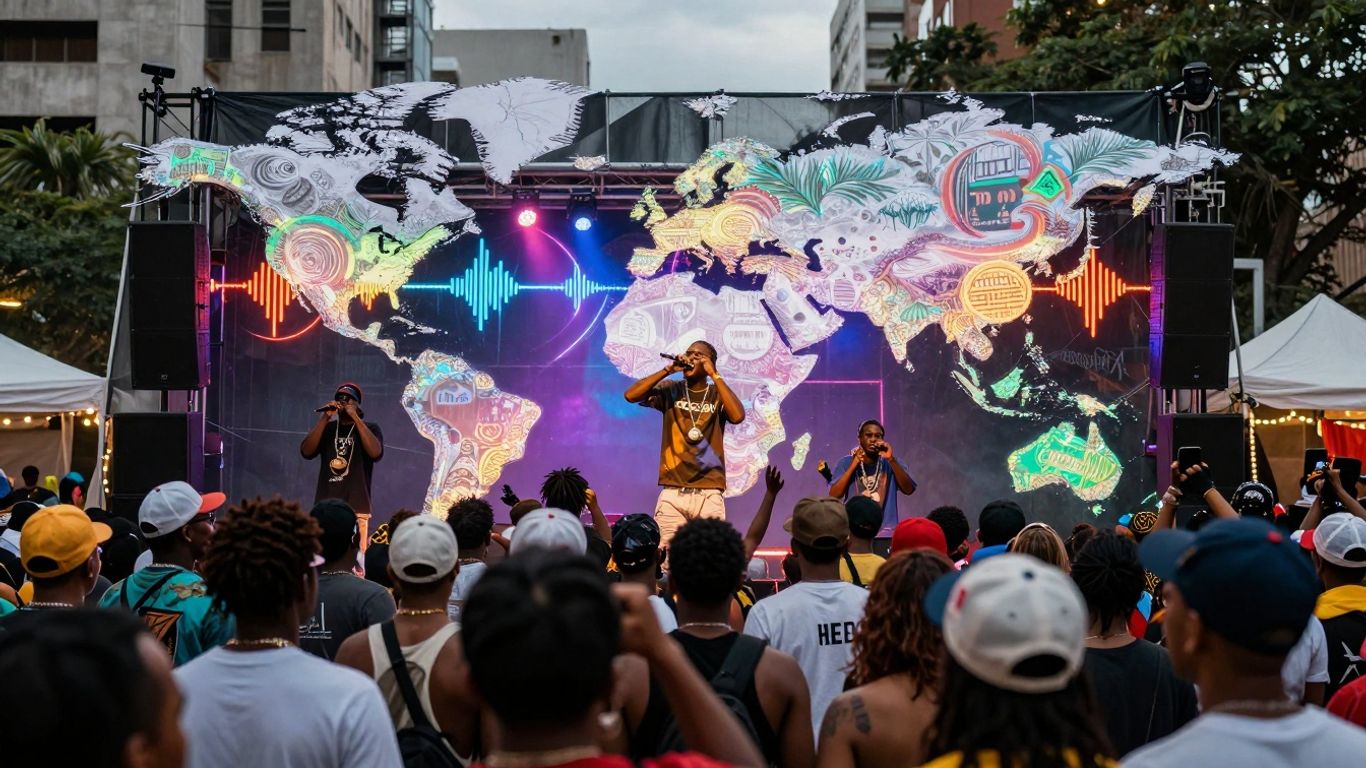
So, you thought those booming 808s and rapid-fire hi-hats were just an American thing? Think again! Southern trap didn't just stay in Atlanta; it packed its bags, hopped on a plane, and basically took over the entire globe. It's wild how a sound born from street realities in the Dirty South ended up making waves from Bogotá to Berlin.
Latin Trap's Fiery Flavor
First up, let's talk about Latin Trap. This isn't just reggaeton with a trap beat slapped on; it's a whole vibe. Artists like Bad Bunny and Anuel AA took the raw energy of trap and mixed it with the infectious rhythms and passionate lyrics of Latin music. The result? Tracks that make you want to dance and feel something deep. It’s got that same gritty feel but with a whole lot of Spanish swagger. You hear those familiar trap elements – the heavy bass, the snare rolls – but it’s infused with a distinct Latin American spice that’s totally addictive.
UK's Grimey Twist on the Trap
Over in the UK, they took trap and gave it their own unique spin, often blending it with the sounds of grime and drill. Think of it as trap music with a bit more edge, a bit more grit, and a whole lot of attitude. The UK scene has this incredible knack for taking a global sound and making it feel completely local. They’ve got their own slang, their own stories, and their own way of delivering those hard-hitting beats. It’s less about the sunny Atlanta streets and more about the urban landscapes of London or Manchester, but the core energy? Still there, just with a different accent.
Afro Trap's Rhythmic Revolution
And then there's Afro Trap. This is where things get really interesting. Artists from across Africa, especially in places like Nigeria and Ghana, started incorporating trap elements into their already rich musical traditions. It’s this incredible fusion of African rhythms, melodies, and vocal styles with the signature trap production. The beats might still have that trap bounce, but they’re layered with sounds and instruments you wouldn’t hear anywhere else. It’s a testament to how versatile trap music is, proving it can adapt and thrive in almost any cultural context. It’s proof that a beat can travel across oceans and still find a way to speak to people.
It's pretty cool to see how these different regions have adopted and adapted trap. They haven't just copied it; they've made it their own, adding their own cultural flavors and lyrical perspectives. It just goes to show that the impact of Southern trap production is way bigger than anyone probably imagined back in the day.
Southern trap music has become a global phenomenon, with its unique sound taking over charts worldwide. From its roots in Atlanta, this energetic style has captured the ears of listeners everywhere. Want to dive deeper into the beats that are shaping music? Explore the world of trap music and find your next favorite sound. Visit our website to discover a huge collection of beats that are ready for you to create with!
So, What's Next for Southern Trap?
Alright, so we've been on this wild ride through the heart of Southern trap, from its gritty beginnings to the global beats it's dropping today. It’s pretty wild how a sound born from the streets has taken over playlists everywhere, right? You’ve seen how it’s changed, how producers are messing with new sounds, and how artists are still finding fresh ways to tell their stories. It’s not just music; it’s a whole vibe that keeps evolving. So, keep your ears open, because the trap scene isn't slowing down. You never know what crazy new beat or fresh flow is just around the corner, ready to shake things up again. It’s been a blast exploring this with you, and honestly, the best is probably yet to come!
Frequently Asked Questions
So, like, where did trap music even start?
Trap music really kicked off in the Southern United States, especially in Atlanta, Georgia. Think late 90s and early 2000s. It grew out of the streets, and the name 'trap' actually comes from slang for places where drugs were sold. Artists like T.I., Gucci Mane, and Young Jeezy were some of the first to really put this sound on the map.
What makes a trap beat sound like trap?
You'll notice some key things! The most important is the super deep, booming bass from the 808 drum machine. Then you've got those super fast, skittering hi-hats that give it a unique rhythm. Producers often use heavy synths to create a cool, sometimes dark, vibe. It's less about sampling old songs and more about building beats from scratch with drum machines and synths.
How did trap music get so huge?
It started small, but then the internet and mixtapes really helped spread the word. Once people outside the South started hearing it, big record labels took notice. Soon, you were hearing trap beats in clubs and on the radio everywhere. Artists like Migos and Travis Scott really blew up and brought it to the mainstream.
Is trap music still changing?
Oh yeah, totally! Artists are mixing trap with all sorts of other music now, like Latin rhythms, electronic sounds, and even stuff like Phonk. You're also hearing more experimental sounds, like glitchy beats and really high energy. It’s always evolving, which is pretty cool.
What do trap artists rap about?
A lot of it comes from real-life experiences. You'll hear stories about life in tough neighborhoods, the struggles people go through, and the desire to make it big and get out of poverty. While that's a big part, artists are also rapping about success, their lifestyles, and more personal stuff as the genre grows.
Has trap music influenced music in other countries?
Definitely! It's gone global. You've got Latin Trap with artists like Bad Bunny blending it with reggaeton. The UK has its own version, often mixed with grime. There's even Afro Trap coming out of Africa. It's amazing how this sound from Atlanta has traveled and been adapted by so many different cultures.