

So, you've probably heard the buzz. AI is doing all sorts of wild things lately, and now it's got its digital sights set on music. It makes you wonder, right? Will AI replace producers? It’s a big question, and honestly, it’s got a lot of people in the music world talking, and maybe a little worried. Let's break down what this all means for your studio setup and your creative process.
Key Takeaways
- AI's musical journey started way back, but recent advancements, like GPT-6's potential, are making people think seriously about its role in music creation.
- AI could make music production more accessible, letting anyone create tracks, but this raises questions for genre purists about authenticity and quality.
- While AI can create complex sounds and evoke moods, it's still unclear if it can truly capture the emotional depth and rule-breaking creativity that human producers bring.
- The real discussion is often about AI as a tool to help producers, rather than a complete replacement, blurring the lines between inspiration and imitation.
- The future likely involves humans and AI working together, creating new sounds and experiences, but ethical questions about ownership and fair play are still on the table.
The AI Beat Drop: Is Your Studio About to Be Replaced?
Alright, let's talk about the elephant in the room, or rather, the algorithm in the studio. You've probably heard the whispers, maybe even seen the headlines: Is AI coming for your job as a music producer? It feels like just yesterday we were all marveling at how a computer could play chess, and now we're talking about machines composing symphonies. It’s a bit wild, right?
From Dartmouth to Dubstep: AI's Musical Origins
Think about it. The whole AI thing didn't just pop up overnight. It’s got roots stretching way back to a summer conference in 1956 at Dartmouth College. A bunch of smart folks got together to figure out if machines could actually think. Fast forward a few decades, and AI started getting serious about music. We're talking about systems that can learn from pretty much all the music ever made. It’s like giving a computer access to every record store and music theory book in existence. And then there was that whole buzz around OpenAI trademarking "GPT-6" and mentioning music production. Suddenly, the idea of AI making tunes that sound like they came from a human producer wasn't just sci-fi anymore.
GPT-6: The Trademark That Got Everyone Talking
So, this "GPT-6" thing. OpenAI, the folks behind some pretty impressive AI, apparently put a trademark on it, and the paperwork specifically mentioned music creation. This was a big deal because it signaled that the tech was getting seriously good at making music. It wasn't just about generating a few random notes; it was about creating compositions. Imagine an AI that can churn out tracks that are hard to tell apart from what you or I might make. That's the kind of future this trademark hinted at, and it definitely got a lot of people in the music world paying attention.
Will AI Make Your Favorite Genres Obsolete?
This is where things get really interesting, and maybe a little scary. Will AI just churn out generic pop songs, or can it actually get into the nitty-gritty of, say, deep house or experimental jazz? Some folks are worried that AI might flood the market with predictable, formulaic music, making it harder for unique sounds to break through. Others think AI could actually help create entirely new genres we haven't even dreamed of yet. It’s a real toss-up, and honestly, the idea of AI mastering your favorite genre is a thought that keeps many producers up at night. Will the soul of music get lost in the code? That's the million-dollar question.
AI as Your New Bandmate: Friend or Foe?
So, is AI going to be your new studio buddy or your worst nightmare? Let's break it down.
Democratizing Beats: Anyone Can Be a Producer Now?
Remember when making music felt like you needed a secret handshake and a degree in sound engineering? Well, AI is kinda blowing that wide open. Think of it like this: you can now tell an AI, "Hey, make me a chill lo-fi beat with a hint of 80s synth," and poof, you've got a starting point. This means way more people can jump in and create music, which is pretty cool. You don't need to spend years learning every knob and fader if your goal is just to get your ideas out there. It’s like suddenly everyone gets a backstage pass to the music-making party.
Techno Purists vs. AI: Gatekeeping or Valid Concerns?
Now, not everyone’s thrilled. You’ve got your die-hard genre fans, like the techno purists, who might look at AI-generated tracks and scoff. They might say it lacks soul or that it’s not
Can AI Capture the Vibe? Worlds of Sound

So, can a bunch of algorithms actually bottle that intangible feeling? You know, the one that makes you want to blast a song on repeat or just stare out the window, lost in thought? It’s a big question, and honestly, it’s a bit like asking if a robot can truly appreciate a sunset. We’ve seen AI do some wild stuff, like creating videos from text prompts – imagine that, but for sound! The idea is that AI could churn out music that perfectly matches a mood, a scene, or even a whole story, just from a description you give it. Think of it as a sonic mood board that actually makes noise.
From Sora's Visuals to AI's Sonic Worlds
Remember those mind-blowing videos AI started spitting out? The tech that made those is now being eyed for music. The goal is to get AI to understand and translate concepts into soundscapes. So, instead of just saying “make a beat,” you could say, “create a track that feels like a rainy Tuesday in a forgotten cyberpunk city, with a hint of existential dread and a surprisingly catchy bassline.” It’s a wild thought, and if it works, it could totally change how we experience music, maybe even blending it with other media in ways we haven’t imagined.
Evoking Emotions: Can Machines Feel the Music?
This is where things get really philosophical. Can AI feel sad, or happy, or angry? Probably not in the way you or I do. But it can learn patterns associated with those emotions in music. It’s like an actor who doesn’t actually feel the character’s pain but can convincingly portray it. AI might analyze thousands of sad songs and figure out the chord progressions, tempos, and instrumentation that humans associate with sadness. So, while it might not be feeling it, it could be pretty darn good at making you feel it. The real test is whether that manufactured emotion holds up over time.
Storytelling Through Sound: AI's Narrative Potential
Music has always been a storyteller. Think about movie soundtracks – they guide your emotions and tell you what’s happening without a single word. AI could potentially do the same. Imagine an AI composer creating a soundtrack for your life, or for a game you’re playing, adapting the music in real-time based on what’s happening. It’s a bit like having a personal composer who’s always on call, ready to score your next adventure. It’s a fascinating prospect, and one that could lead to some seriously immersive experiences.
The big debate is whether AI can replicate the spark of human creativity that comes from lived experience, intuition, and maybe even a bit of happy accident. It’s one thing to follow a recipe, quite another to invent a new dish.
Here’s a quick rundown of what AI might bring to the table:
- Mood Matching: Generating tracks that perfectly fit a specific emotional vibe.
- Concept-Driven Music: Creating sounds based on abstract ideas or detailed descriptions.
- Adaptive Soundtracks: Music that changes and evolves with a narrative or user interaction.
- New Sonic Palettes: Discovering sound combinations humans might not think of.
It’s a bit of a wild west out there, and we’re still figuring out if AI can truly capture the magic, or if it’ll just be a really fancy sound effects generator. Only time, and a lot more data, will tell.
The Human Touch: Why AI Can't (Yet) Replace You
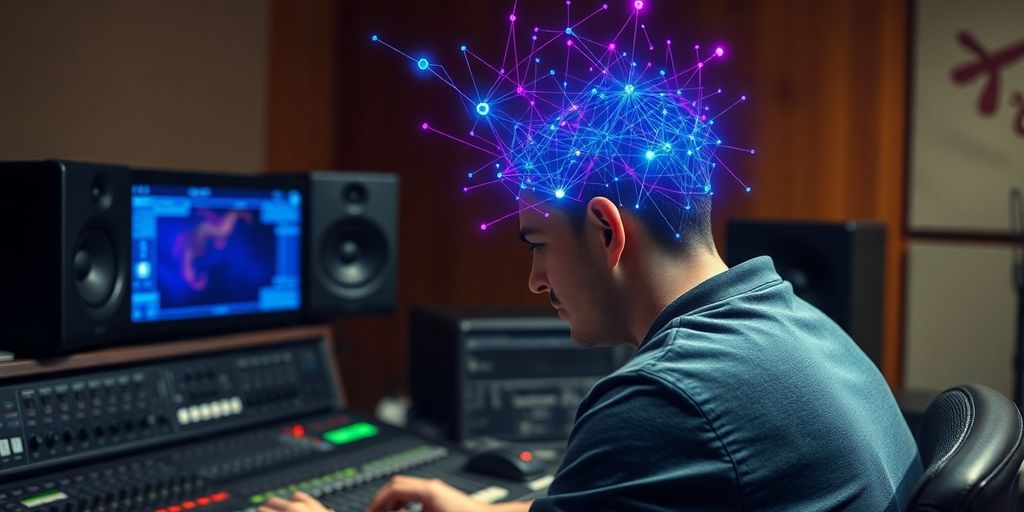
Breaking the Rules: Where AI Falls Short
Look, AI is getting pretty slick. It can whip up a beat that sounds almost like the real deal, and for some folks, that's enough. But let's be real, music isn't just about hitting the right notes or following a predictable pattern. Think about your favorite artists – the ones who really make you feel something. They're not just following a recipe; they're breaking it, bending it, and sometimes, setting it on fire. AI, on the other hand, is trained on what already exists. It's like a super-smart parrot, repeating what it's heard. It doesn't have that spark, that gut feeling that tells you, "Yeah, this weird chord change? It's gonna work." True artistry often comes from defying expectations, not just meeting them.
The Ghost in the Machine: Artistic Sensibility vs. Algorithms
This is where things get really interesting. Can an algorithm truly understand the vibe? Can it capture that raw emotion you get from a perfectly timed vocal crack or a slightly off-kilter drum fill? Probably not. AI can analyze data, sure, but it can't feel the melancholy of a rainy day or the electric buzz of a crowded concert. That's the stuff that makes music connect with us on a deeper level. It's the human experience, the messy, unpredictable, beautiful chaos of life, that fuels genuine creativity. AI might give you a technically perfect track, but it's unlikely to give you goosebumps.
Grimes' Royalty Gambit: A Glimpse into the Future?
Remember when Grimes offered to split royalties 50/50 with anyone who used her voice for AI songs? It was a wild move, and honestly, a bit of a head-scratcher. While it showed a willingness to explore new tech, it also highlighted a potential future where artists might try to control or even profit from AI mimicking their sound. But here's the thing: even with that offer, it's still her voice, her artistic identity being used. It’s a fascinating experiment, but it doesn't mean AI is suddenly going to be writing the next chart-topping hit on its own. It’s more like a tool, a really fancy one, but still a tool in the hands of a human creator.
AI-Assisted vs. AI-Generated: What's the Real Deal?
Okay, so we've talked about AI making music, but let's get real for a sec. There's a big difference between AI helping you make music and AI just churning out a whole song by itself. Think of it like this: AI-assisted is like having a super-smart intern who can whip up chord progressions or suggest drum patterns. AI-generated? That's more like the intern writing the entire symphony, score and all, without you even looking over their shoulder. And honestly, most of us are probably more interested in the intern who can give us a hand, not take over the whole gig.
AI as Your Studio Assistant, Not Your Replacement
This is where things get interesting, and maybe a little less scary. Instead of thinking of AI as the guy who's gonna steal your job, picture it as your new best friend in the studio. Need a killer bassline but your brain is fried? AI can spit out a few options. Stuck on a melody? AI might just have that spark you need. It's like having an infinite sample library, but instead of just loops, it's generating ideas. The goal here is to use AI to boost your own creativity, not to replace it. It’s not about letting the machine do all the work; it’s about using it to push your own boundaries and discover sounds you might never have found otherwise. Think of it as a really advanced tool, like a new synth or a fancy effects pedal, but for your creative process.
The Fine Line Between Inspiration and Imitation
This is where it gets a bit murky, right? When does AI inspiration turn into just copying? If an AI spits out a melody that sounds suspiciously like that track everyone's obsessed with, is that okay? It’s a tricky question. We’ve all used samples, and nobody bats an eye. But when an AI generates something that’s almost there, but not quite, it feels different. It’s like the AI is trying to be clever, but it’s walking a tightrope. You’ve got to be smart about it. If you use an AI-generated idea, you really need to make it your own. Change the chords, tweak the melody, add your own flair. If you just take what the AI gives you and call it a day, well, that’s where the
The Future of Music: A Harmonious AI-Human Symphony?
So, where does all this leave us? Are we heading towards a future where your DAW is replaced by a chatbot that spits out chart-toppers on command? Probably not, at least not entirely. Think of it less like a hostile takeover and more like a really, really talented intern who never sleeps. The real magic is likely to happen when you, the human producer with all your quirks and questionable life choices, team up with these AI tools.
Collaboration is Key: Unlocking New Creative Realms
Imagine feeding an AI a vibe – say, "a rainy Tuesday in Seattle meets a funkadelic disco party." Instead of just getting a generic beat, the AI could spit out a dozen unique melodic ideas, rhythmic patterns, or even entire sonic landscapes that you'd never have dreamed up on your own. You can then cherry-pick the best bits, twist them, mangle them, and inject your own human oomph into them. It’s like having an infinite brainstorming partner who’s also a virtuoso on every instrument ever invented. This isn't about replacing you; it's about giving you superpowers you didn't know you had.
Ethical Beats: Fair Play in the Age of AI
Of course, we can't just blindly embrace the robot overlords without thinking about the nitty-gritty. What happens to the artists whose music the AI learned from? How do we make sure everyone gets paid fairly when a machine is doing a chunk of the creative heavy lifting? These are the kinds of questions we need to hash out now, before the AI starts demanding royalties for its contributions. It’s like figuring out who gets the last slice of pizza – gotta have rules!
Will AI Replace Producers? The Verdict is Still Out!
Ultimately, the jury is still out on whether AI will make producers obsolete. But if you ask me, it’s looking more like a partnership. AI can handle the grunt work, the endless variations, and maybe even some of the more technical aspects. But that spark? That gut feeling that tells you to add that weird synth sound or chop up that vocal sample in a totally unexpected way? That’s still your domain. The future of music production is probably a lot more human-AI collaboration than a full-on AI takeover. So, keep those headphones on, keep experimenting, and maybe start learning how to talk to your computer in a way it understands. It might just be your next bandmate.
Imagine a world where music is made by both people and smart computers working together. It's like a band where everyone plays their part perfectly! This new way of making music can help artists create amazing sounds and overcome creative blocks. Want to be part of this exciting future? Check out our awesome loop kits to start making your own unique music today!
So, Are We All Doomed? (Spoiler: Probably Not!)
Look, nobody has a crystal ball for this stuff, right? AI is getting wild, and yeah, it can whip up a beat that sounds pretty decent. But is it going to replace that spark, that weird little thing you do that makes your track yours? Probably not. Think of AI as your new, super-powered intern. It can fetch sounds, suggest ideas, and maybe even finish that annoying bridge you've been stuck on. But you're still the boss, the one with the taste, the one who knows when to break the rules (or when to just throw in a random banjo solo because, why not?). So keep making your noise, embrace the tech if you want, but don't let the robots steal your creative mojo. Your weirdness is your superpower, and AI can't replicate that... yet. Now go make some music!
Frequently Asked Questions
Will AI completely replace human music producers?
Think of AI like a super-smart assistant for making music. It can help you come up with ideas, create beats, or even finish a song. But it's not taking over! You're still the boss, guiding the AI and adding your own unique touch. It's more about working together than being replaced.
Can AI really create original and emotional music like humans do?
It's not really about AI being 'better' than humans. AI is great at finding patterns and putting things together based on tons of data. But music is also about feelings, breaking rules, and having a special vibe. AI can't quite capture that human spark or know when to break the rules in a cool way.
How can AI help create specific moods or tell stories in music?
Imagine you want to make a song that feels like a rainy day in a spooky forest. AI could help you create sounds that match that mood! It can take descriptions and turn them into music, which is pretty cool for telling stories or setting a scene.
Is there a risk that AI-made music will sound generic or soulless?
Some people worry that music made by AI might sound the same or lack soul. While AI can make technically good music, the real magic often comes from a producer's personal experiences and emotions, which AI doesn't have.
Why should I still make music if AI can create it too?
Think about it: if you love making music just for the fun of it, or to express yourself, AI doesn't really change that. You're still doing it for the joy of creating, not just to beat a machine.
What's the difference between AI helping with music and AI making music all by itself?
It's like the difference between using a calculator and having someone else do all your math homework for you. AI can help you with parts of the process, like suggesting a melody or a drum beat. But a fully AI-generated song is made entirely by the computer, with little human input.


