

Ever thought about what would happen if you handed your playlist over to a computer and told it to make something new? That’s exactly what’s going on with neural networks music. These digital brains are picking up on everything from old-school rock to weird experimental sounds, mashing it all together, and spitting out songs that don’t fit any genre you already know. It’s not just about copying what’s already out there—these AI systems are creating music that’s strange, catchy, and sometimes even a little confusing. Whether you’re into smooth jazz or heavy metal, neural networks music is shaking things up and making us rethink what music can even be.
Key Takeaways
- Neural networks music is changing how new genres are created by blending influences from all sorts of styles.
- AI can spot musical patterns and combine them in ways humans might never think of, leading to fresh and surprising sounds.
- Tech like RNNs, LSTMs, GANs, and Transformers are the main tools behind this musical shake-up.
- Sometimes AI music sounds odd or off at first, but with a bit of tweaking, it can get pretty close to professional quality.
- The rise of neural networks music means artists and listeners are now part of a creative mix that breaks down old genre walls.
Neural Networks Music: The Magical Digital Musicians
So, you want to know how these digital whizzes—neural networks—have gone from backstage geeks to headline performers in the music world? Buckle up, because this is where science and sound combine to make some seriously wild music.
Meet the AI Band: What Makes a Neural Network Groove?
Picture this: instead of a drummer, pianist, or bassist, you’ve got millions of tiny digital neurons crunching numbers and remembering your favorite riffs. Neural networks are like a super nerdy band learning every song on Earth, then jamming on their own. They do this by listening (not with ears, but code) and recognizing all those patterns buried in music—chord changes, tempo shifts, wild solos, even awkward pauses.
- They don’t just memorize tracks—they think about them!
- The more music you feed them, the more unique their output.
- Neural networks can also take instructions—want jazz in the style of 1980s pop? Just ask.
Like a bandmate you never have to buy pizza for, these neural networks are always ready to try something new, no matter how weird your request gets.
Why Neural Networks Are Obsessed with Musical Patterns
Humans might get bored of repetition, but not these digital musicians. Neural networks are fascinated by patterns in music because that’s how they learn to compose. Every drum loop, guitar lick, or hum becomes training data. They spot trends and habits in melodies the way a superfan recognizes a song from just one note.
Here’s why patterns are their bread and butter:
- Predictability helps them sense what comes next in a song, so their music doesn’t sound random.
- They remix and rearrange ideas from all over the place—country, hip-hop, classical—mashing them together in ways no human thought of.
- Over time, they’re even better at making music that surprises us. We think we’ve heard it all… and then get hit with something fresh.
From Human Teachers to Algorithmic Composers
Neural networks don’t just wake up one day ready to write symphonies. They get trained—by us! We teach them by letting them hear mountains of MP3s, scores, or even MIDI files. At first, they sound like a karaoke machine set on ‘weird robot’ mode…but give it time. Every mistake, every odd note, they learn and adapt.
Eventually, they stop copying and start creating. That’s when it gets cool. Now they can:
- Write new music in old styles
- Blend together genres in ways nobody has ever done
- Take a tiny prompt and spin it into a full-blown song
In the end, these digital maestros become real creative partners. Play with their settings, throw crazy ideas at them—and you’ve got the start of something totally new.
How Neural Networks Mix Genres Like a Sonic Smoothie
Ready for a wild ride through music history — with an AI twist? Neural networks are like those friends who throw everything into a blender and hope for the best… except they usually turn out something tastier (and weirder) than you expected. Let’s break down how these algorithms are making music you never knew you wanted to hear.
Sampling Everything: From Gregorian Chants to Glitch-Hop
You know how a DJ might grab a bit from, say, a centuries-old choir recording and toss it into a fresh dance track? AI basically does the same thing, but without the dusty vinyl and late-night caffeine binges. Neural networks get trained on almost anything you can think of:
- Medieval chants
- Hardcore techno
- Jazz standards and video game soundtracks
- Obscure folk music, classic rock, and even polka
What’s wild: These algorithms don’t care about musical boundaries. If it’s got notes and rhythm, it can wind up in the next AI hit. It doesn’t judge, just absorbs. Imagine a playlist that shuffles through the entire history of music every time it creates a new song.
Music made by neural networks often combines sounds you never thought would mesh, and sometimes it’s brilliant, sometimes it’s bizarre — but it’s rarely boring.
The Art of Genre-Blending: Creating Musical Mashups
Here’s where it gets funky. Neural networks spot patterns where regular musicians might not. They can take the pounding beat of hip-hop, stir in some spacey synths, sprinkle in the swing of jazz, and come up with something that doesn’t fit into any one box. Sometimes these sonic mashups give birth to completely new flavors.
Here’s why this works so well:
- Neural nets find common ground between different genres (like, both reggae and blues use call-and-response techniques)
- They experiment without getting bored or tired (unlike your average guitarist)
- They don’t worry about what’s cool or not — only what sounds interesting
| Genre 1 | Genre 2 | AI Mashup Output Example |
|---|---|---|
| Jazz | Chiptune | Swinging 8-bit rhythms |
| Gregorian | Trap | Chanting over heavy beats |
| Country | Industrial Metal | Banjo riffs with distortion |
Unveiling Genres with No Names (Yet)
Have you heard a song and had literally no clue what to call it? That’s what happens when neural networks start inventing new styles. They’re great at blending so much stuff together that sometimes you get fresh combinations that don’t fit any existing label — yet.
The process usually goes a little like this:
- AI gets trained on tons of songs
- It starts mixing and matching patterns nobody really expected
- Out come tracks that your playlist app can’t even categorize
You might not know what to call it, but hey, you might just love it. Welcome to the world where the genre list is always growing and you’re the first person to hear something completely off-the-wall.
Don’t stress if you can’t describe what you’re listening to – with AI musicians, the vocabulary can barely keep up with the sounds.
Deep Learning Hits the Stage: Neural Networks in Action
Alright, it’s showtime for the brainy side of neural networks—this is where the real music magic takes shape. If you’ve ever wondered how a computer can string together a killer melody or spit out a chorus that sounds almost too catchy, it’s all happening right here, behind the (digital) curtain.
Let’s Get Technical: RNNs, LSTMs, and Transformers Explained
The backstage crew includes some wild acronyms—RNNs, LSTMs, and Transformers. Don’t worry, nobody expects you to turn into a computer scientist overnight. Here’s the scoop:
- RNNs (Recurrent Neural Networks): Think of these as the musicians who never forget what came before. They keep track of every note and beat, making sure the current sound fits with the whole tune.
- LSTMs (Long Short-Term Memory networks): These are RNNs with an extra trick—they handle long musical ideas, not just short riffs, so your AI-generated songs don’t end up sounding random.
- Transformers: Now, these guys use self-attention, meaning they spot patterns all over the place, not just in a straight line. They’re the secret behind creating complex pieces where everything clicks, even if parts are far apart in the song.
If you ever get lost in a swirl of AI-generated music, blame it (or thank it!) on these three musical masterminds.
Generative Adversarial Networks: A Sonic Face-Off
Picture this: two AIs in the world’s oddest jam session. One’s the eager musician (the generator), cranking out tracks, and the other’s a relentless critic (the discriminator), determined to call out the fakes. They keep sparring until the music feels truly fresh and convincing.
- The generator tries new ideas
- The discriminator plays judge and jury
- Back and forth they go—till the generator drops something even you might mistake for a human creation!
This AI face-off is what makes GANs perfect for experimental, unexpected soundscapes.
Music Transformers: Beyond Robots and More Than Meets the Ear
You’ve heard the name—Transformers—but these aren’t shape-shifting cars. In music, they give the AI the ability to pay attention (“listen”) to every part of a song all at once. This means truly wild genre twists and intricate harmonies you don’t ever see coming. If you’re after a track where a chill intro suddenly explodes into an electronic breakdown, thank a music transformer for making it sound smooth rather than jarring.
Here’s a simple table breaking down the main neural networks doing their thing in music:
| Model | Special Skill | Musical Superpower |
|---|---|---|
| RNN | Sequence learning | Consistent melodies and harmonies |
| LSTM | Remembering long-term patterns | Extended, logical music phrases |
| Transformer | Checking all parts at once | Complex, non-repetitive structures |
| GAN | Adversarial creativity | Surprising, unique sounds |
So, next time you hit play on an AI-made tune, just know it took a wild crew of digital musicians and critics to make it happen! And that, my friend, is where deep learning hits the stage.
The Mad Science of Neural Networks Music Replication
Ever wondered if a computer can play Beethoven with a punk edge or jam on the spot with you at a party? Welcome to the reality of music replication with neural networks—where digital brains learn to imitate, remix, and totally reimagine your favorite tunes. Let’s see what happens when you let machines loose in the music studio.
Copying Beethoven – With a Twist
So, here’s the deal: neural networks don’t just play back old tracks. They study thousands of hours of music—chords, melodies, crescendos, emotions—so well that they can spit out full compositions “in the style of” anyone. Think Beethoven meets synth-pop, or jazz with a splash of cyberpunk. It’s imitation, but smarter. Sometimes the results are spot-on, and other times, you get a classical fugue with the swagger of a nightclub banger.
- Analysis: The AI breaks down subtle stylistic details from its study material.
- Reinvention: It creates music that echoes the original but spins it into something you’ve never heard.
- Surprise: Sometimes it adds quirks that even the original composer wouldn’t have dreamed of.
AI isn’t just copying—it’s making quirky, sometimes weirdly addictive music marriages.
Real-Time Remixing: When AI Plays Along Live
Let’s say you want an AI to hop in on your jam session. Guess what—it can. Using real-time processing, neural networks can listen, learn, and respond as you play. This transforms a solo practice night into a techno-jazz showdown, and you don’t even have to ask your roommate to grab their bass.
Here’s what real-time AI remixing can do:
- Listen to your playing or singing and follow along instantly.
- Remix in-progress: keep the beat, alter the mood, drop in a glitch effect on the fly.
- Change genre mid-song—reggae intro, trance outro, whatever you want.
| Feature | Old School (Human) | New School (AI) |
|---|---|---|
| Jam Response | Minutes/Years | Milliseconds |
| Knows Every Song | Nope | Kinda, yeah |
| Needs Sleep | Yes | Never |
Seriously, you haven’t lived until an AI has out-improvised you in real time.
Style Transfer: Swapping Mozarts for Metalheads
What if you love Mozart, but deep down you’re a metalhead? Neural networks can do something called style transfer—basically, it takes a song’s notes and rewrites them into an entirely different vibe or genre. Imagine your favorite lullaby headbanged into a shredding guitar solo, or a rock anthem softened into a gentle piano ballad.
How style transfer works:
- AI separates the ‘content’ (the notes) from the ‘style’ (how it sounds).
- It grabs the style from one piece (say, 80s heavy metal) and applies it to another (maybe a nursery rhyme).
- You get audio that’s new, weird, and sometimes hilarious.
The best part? This stuff isn’t some far-off tech fantasy—you can try it online right now. Just don’t blame the AI if your lullaby suddenly makes the baby headbang.
Beyond Human Ears: Discovering Sounds Humans Never Dreamed Up
Alright, here's where things get wild. Neural networks aren't just copying old tunes or remixing your favorite throwback jams. They're opening doors to sounds and musical ideas even the most open-minded music nerds haven't imagined. If you thought you'd heard it all, think again—AI is just getting started on its musical adventure.
Unexpected Harmonies and the Element of AI Surprise
You know that moment when a song takes an unexpected turn and leaves you wondering, "How did they come up with that?" Neural networks crank this up to eleven. Sometimes, they push notes, rhythms, and harmonies so far off the beaten path, they invent a new one entirely.
- You might hear a cello sharing the same melody as a sitar, then, out of nowhere, layer in microtones usually found only in avant-garde jazz or obscure folk.
- Dramatic key changes appear in places no human composer would dare (or maybe even want) to.
- Melodies loop back on themselves or glitch in strange, surprisingly catchy ways.
What you end up with sometimes sounds bizarre, sometimes beautiful, and sometimes both. It’s like getting a playlist from another planet—and isn’t that a little exciting?
Extreme Instrument Mashups: Think Bagpipes and Synths
Not every human band is going to put Mongolian throat singing over trance synths with a reggae beat. Neural networks have no such fear. They treat every sound and instrument as a fresh paint color, and they aren't afraid of wild combinations.
Here's a (totally real) AI-generated genre mashup table:
| AI Output Combo | What It Sounds Like |
|---|---|
| Tuvan throat singing + trap beats | Ethereal and gritty |
| Bagpipes + industrial synths | Piercing but strangely epic |
| Jazz trumpet + gamelan ensemble | Mellow chaos |
| Bluegrass banjo + vaporwave pads | Fast nostalgia |
These mixes might never show up on the radio, but they're creating a whole new set of musical flavors—recipes only a neural network could invent.
Emotional AI: Teaching Neural Networks to Feel
This is where things get a little spooky. AI can't feel emotions like you do, but it can spot patterns in how music makes people feel. By analyzing what bits of a song stir up excitement or calm, it starts to copy emotional arcs. Sometimes, the result lands somewhere between joy and confusion—but sometimes it's spot on.
- Generating a song that starts with melancholy piano, builds to a massive drop, then chills out with delicate strings.
- Skirting the line between eerie and uplifting, creating moods we don't even have words for yet.
- Exploring new combinations of sound, pace, and melody, producing a soundtrack for feelings we never realized we had.
The wildest part? Some researchers think AI music will help us discover emotions humans can't put into words yet. Now that's a playlist worth waiting for.
Overcoming AI’s Musical Meltdowns
When Robots Play Off-Key: Common Pitfalls
You’d think a digital bandmate would always hit the right notes, but nope, neural networks still embarrass themselves musically. Sometimes, they’ll get stuck on a loop, produce emotionless riffs, or mash together genres that just don’t belong together—imagine Gregorian chant and dubstep fighting for dominance.
Here’s where things get glitchy:
- Repetition overload: Some AIs will repeat the same few bars endlessly, like a DJ with one broken record.
- Genre confusion: Trained mostly on one style, they might stubbornly stick to classical or lose themselves in unfamiliar genres.
- Emotional flatness: Unlike humans, neural networks won’t pour love or heartbreak into their tunes unless you seriously tinker with their training.
When you hear a tune that sounds like an elevator broke down in a rave, that’s probably an AI still learning the ropes of songwriting.
From Awkward Loops to Auditory Bliss
So, how do you help your algorithmic buddy sound less like an amateur and more like a musical prodigy? It’s all about data and feedback. If you train on a narrow set—say, only classical piano—your system is pretty much going to turn out Mozart impersonations. The fix? Throw in samples from jazz, folk, pop, and more. The bigger, messier, and more diverse the dataset, the better your AI handles musical curveballs. There's even research into training neural networks in musical composition that shows broader data leads to cooler, more coherent tracks.
Here’s what helps smooth out the rough patches:
- Better training data: Feed it lots of different genres and clean, labeled tracks.
- Feedback loops: Get people to listen and rate what’s good or cringy, then use that feedback to retune the generator.
- Hierarchical models: Let AI learn to stitch together big-picture musical architecture instead of obsessing over tiny details.
Fine-Tuning Neural Networks for a Professional Sound
Think of this stage like the final touches on a messy haircut. Your AI's already got the basics, but now it's about trimming out the missteps.
Key strategies for a professional finish:
- Use emotion-tagged datasets to help your AI pick up on mood and phrasing
- Reinforcement learning: Set up simple human feedback so the neural network isn’t guessing what sounds good
- Prune and compress the algorithm for a clean, less resource-hungry performance
- Mix AI with human musicians—sometimes, that’s the secret sauce
| Common Problem | Human Fix |
|---|---|
| Awkward repetition | More diverse training data |
| No emotional feel | Emotion-tagged music samples |
| Genre monotony | Cross-genre datasets |
| Live performance issues | Real-time feedback pairing |
By stacking up better data, live corrections, and a pinch of human touch, you can actually help your neural network bust out tracks that don’t just sound passable—they sound fresh, fun, and maybe even spark something the world hasn't heard before!
Why Neural Networks Music is Sparking Creative Revolutions
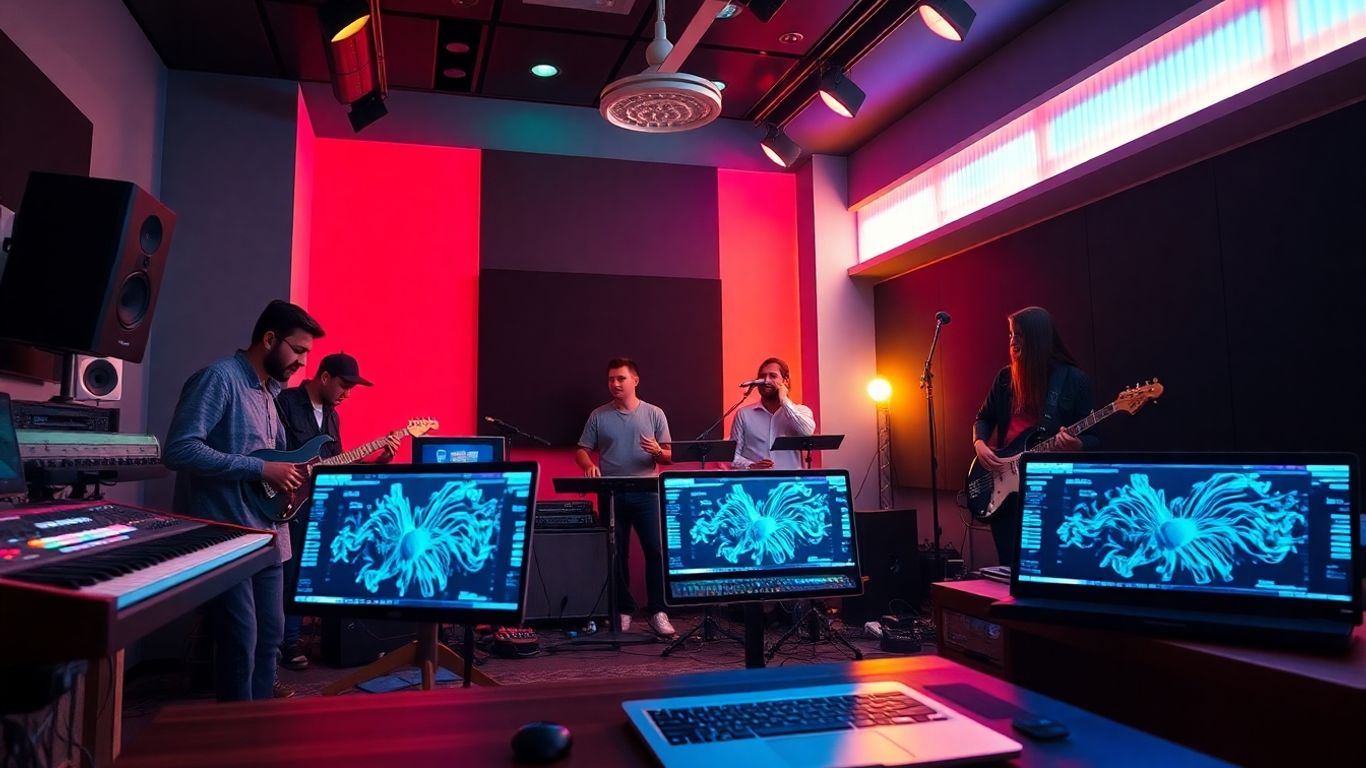
Neural networks are flipping the script on music, and honestly, it’s more fun than arguing over who gets the aux cord on a road trip. Suddenly, your playlist isn’t limited by genre walls or even by what humans have ever thought up before. So, what makes this wave so exciting? Let’s break down how AI is teaming up with humans, reshaping the DJ booth, and turning your music feed into an endless exploration.
Collaborative Jamming: Humans, AI, and Happy Accidents
Ever wish you had a bandmate who never got tired or crabby? That’s AI for you! Instead of sticking to the usual scales and rhythms, you and your neural network sidekick can riff off each other, making music that surprises even you. It’s not about AI replacing humans; it’s about AI bringing unexpected twists, weird harmonies, or sweet grooves you never would’ve jammed out on your own.
- You suggest a melody, AI adds wild harmonies.
- AI comes up with a beat, you mix in your own flavor.
- Sometimes, you both just stumble into an accidental hit!
Sometimes a tune just appears out of thin (digital) air – it wasn’t human, it wasn’t machine – it was pure musical chaos, and it’s awesome.
The Rise of Algorithmic Producers and AI DJs
It’s not just nerds in labs feeding these networks data until they spit out something catchy. Algorithmic producers are popping up everywhere, pumping out beats, hooks, and even full albums almost overnight. The wild thing? These digital producers can pull influences from anywhere, mash them together, and create something you seriously can’t find in any record store. Think of it as having Spotify, Ableton, and a crate-digging DJ all rolled into one.
You get to hear music that feels freshly picked from a parallel universe.
Here’s what AI brings to the production table:
- Nonstop creativity – AI doesn’t get creator’s block.
- Remixing skills that would make even the best DJs jealous.
- The ability to process influences from thousands of genres at once.
Breaking Down the Genre Wall: The Infinite Playlist Effect
Remember when music fit into neat little boxes – rock, jazz, hip hop? Not anymore! Neural networks couldn’t care less about labels. They're mixing jazz vocals with trap beats, throwing industrial noises over folk guitar, or blending retro synths with traditional chants. The result? Whole new genres surfacing before they even have names. If you ever feel like your playlist is getting boring, now there’s an infinite supply of hybrids to keep you grooving.
What’s Changing in Your Queue?
| Old School Playlists | Neural Network Playlists |
|---|---|
| 10 genres to choose | Limitless genre mashups |
| Hits from 5 decades | Fusion tracks from now |
| Predictable remixes | Wild, unpredictable blends |
AI isn’t here to take over your music—it’s here to make sure you never run out of things to listen to. So toss out your old playlists, get ready for strange combos, and let neural networks lead you somewhere you’ve never danced before!
Neural networks are helping people create music in brand new ways. They make it easy for anyone to experiment with sounds and styles. If you want to spark your own music journey, check out all the beats waiting for you on our website. Get inspired and start making your own tracks today!
Conclusion: The Future Sounds Weird (and Awesome)
So, here we are at the end of our little AI music adventure. Who would've guessed that a bunch of digital neurons could cook up tunes that make you want to dance, chill, or just scratch your head in confusion? Neural networks are mixing up sounds and styles in ways that nobody saw coming. You might wake up tomorrow and find your playlist full of genres you can't even pronounce—thanks, robots. Whether you're a musician, a curious listener, or just someone who likes pressing buttons to see what happens, this is your moment to jump in. The next big genre might be just a few lines of code away. So go ahead, fire up that AI music tool, and see what kind of weird, wonderful noise you can make. Who knows? Maybe you'll invent the next big thing. Or at least have a good laugh trying.
Frequently Asked Questions
How do neural networks actually create new music genres?
Neural networks listen to tons of different songs and learn the patterns in them, like rhythms, melodies, and harmonies. Then, they mix and match these patterns in ways people might not think of, making brand new sounds and even whole new genres that never existed before.
Can AI music sound as good as music made by humans?
Yep, sometimes it can! AI music can be really impressive, especially when the neural network is trained well. It can copy styles, blend genres, and even add its own twist. But sometimes, it might make weird mistakes or sound a bit off, so it’s still learning.
What kinds of neural networks are used to make music?
There are a few main types: RNNs (Recurrent Neural Networks), LSTMs (Long Short-Term Memory networks), GANs (Generative Adversarial Networks), and Transformers. Each one has its own way of handling music, from following patterns over time to making creative mashups.
Can I make my own AI music at home?
Totally! There are lots of online tools and apps that let you use AI to make your own music. You just pick a style or give it some ideas, and the AI does the rest. You don’t need to be a pro musician to get started.
Does AI music always sound weird or robotic?
Not always! Sometimes AI music can sound just like something a human would make, especially if it’s trained on lots of real music. But other times, it might come up with strange or unexpected sounds. That’s part of what makes it fun and interesting.
Will AI music replace human musicians?
Nope, AI is more like a new tool for musicians, not a replacement. It can help people come up with new ideas, blend styles, or even jam together. Most of the coolest AI music happens when humans and AI work as a team.


