

Ever wonder why some songs just stick in your head, the ones you can't stop humming after just one listen? You've probably noticed that a lot of music out there today feels pretty similar, especially on streaming platforms. It's like there's a secret formula, and it often comes down to those catchy little musical phrases. Let's break down why these melody loops are basically running the show in the music world right now.
Key Takeaways
- The first 30 seconds of a song are super important for streaming because that's the minimum play time for a stream to count. This means songs need to grab you fast, often with repeating hooks right at the start.
- We tend to listen on devices with smaller speakers, like phones, which changes how music is made. Producers focus on making sure the important sounds, like a 'phantom bass,' come through even on basic speakers.
- Streaming data and playlists have a huge influence. Artists and producers look at what's popular and often create music that fits these trends, sometimes leading to songs that sound formulaic.
- Melody loops are the backbone of many streaming hits. Their catchiness and repetition make them easy to remember and play over and over, which is exactly what streaming algorithms and listeners seem to favor.
- Streaming has made music global. A song that does well in one place can quickly become a worldwide hit thanks to how easily music spreads online, changing how hits are made and discovered.
The Hook Is The Hero: Why Melody Loops Rule The Roost
Alright, let's talk about what really grabs you when you hit play on a streaming service. It's not the fancy intro or the deep philosophical lyrics (usually). It's that catchy bit, that musical phrase that burrows into your brain and refuses to leave. We're talking about the melody loop, the undisputed champion of the streaming era. Think about it: you've got mere seconds to make an impression. Thirty seconds to stardom isn't just a catchy phrase; it's the reality of how long you have before someone either hits skip or adds your track to their playlist.
Thirty Seconds To Stardom: The Streaming Sweet Spot
Back in the day, you could ease into a song. Build tension, tell a story, maybe even take a bathroom break before the chorus. Not anymore. Streaming platforms have trained our brains for instant gratification. If a song doesn't hook you in the first half-minute, you're probably moving on. This means songwriters and producers are laser-focused on crafting that immediate earworm. It's like speed dating for your ears – no time for small talk, just get to the good stuff!
Instant Gratification Nation: No Time For Slow Burners
We live in a world of one-click ordering and endless scrolling. Our attention spans are, shall we say, flexible. A song that takes its sweet time to get going just doesn't fit the vibe. You want that immediate payoff, that musical dopamine hit. This is why simple, repeatable melodic ideas often win out. They're the sonic equivalent of a perfectly crafted meme – instantly understandable and shareable.
Familiarity Breeds Streams: The Power Of The Repeat
There's a reason why certain melodies get stuck in your head. They're often built on simple, repeating patterns that are easy to process and remember. This isn't just about being annoying; it's about creating a sense of comfort and recognition. When a melody feels familiar, even if you've never heard the song before, it creates a connection. It's like running into an old friend at a party. This familiarity is a huge driver for repeat listens and, consequently, more streams. It's why a well-crafted melody that stands out can be the difference between a fleeting listen and a permanent spot on someone's rotation.
From Aggression To Intimacy: The Sonic Shift
Remember when pop music sounded like it was recorded in a stadium during a monster truck rally? Yeah, me neither, but it feels like that was the vibe not too long ago. Things have definitely changed. You might have noticed that the loud, in-your-face bangers are taking a backseat. Instead, we're hearing more of a chill, almost whispered approach. Think less shouting, more crooning. It’s like the music decided to put on a cozy sweater and have a nice cup of tea.
Whispers On The Wind: The Rise Of The Intimate Vibe
So, what’s with this sudden urge for musical cuddles? Well, it seems like the artists are picking up on what we, the listeners, are feeling. We’re not always in the mood for a sonic assault. Sometimes, you just want something that feels personal, like the singer is right there in the room with you, sharing a secret. This shift towards intimacy means you’ll hear more stripped-back arrangements, softer vocal deliveries, and melodies that feel like a gentle hug. It’s a move away from the aggressive anthems of the past towards something more relatable and, dare I say, vulnerable.
Phantom Bass For Pocket Speakers
Ever tried to blast a bass-heavy track on your phone, only to hear… well, not much bass? It’s a common problem. Producers are getting super smart about this. They’re figuring out how to make music feel bassy even on tiny speakers. This is often called "phantom bass." It’s not about actually shaking the room, but about tricking your ears into hearing those low frequencies. This means you get a fuller sound, no matter if you’re listening on fancy headphones or just your laptop’s built-in speakers. It’s all about making the music sound good everywhere, all the time.
Less Grit, More Grace: The New Pop Persona
Forget the rough-around-the-edges swagger. The new pop star is all about smooth moves and polished sounds. We’re seeing a trend where the raw, gritty edges are being sanded down. This doesn’t mean the music is boring, far from it! It just means the focus has shifted. Instead of shouting about their troubles, artists are exploring more nuanced emotions. This often translates to cleaner production, more melodic vocal lines, and a general vibe that’s less about rebellion and more about connection. It’s a sonic evolution that mirrors our own changing tastes.
Here’s a quick look at how the vibe has changed:
| Era | Dominant Vibe | Typical Sound |
|---|---|---|
| Early 2000s | Aggressive, Loud | Heavy synths, shouted vocals |
| Mid 2010s | Energetic, Anthemic | Big choruses, driving beats |
| Present | Intimate, Smooth | Subtle melodies, softer vocals |
It’s a fascinating time for music, and you can really hear the difference when you pay attention. The way we listen is changing the way music is made, and honestly, it’s pretty cool to witness.
Data-Driven Dreams: Algorithms And Earworms
The Playlist Power Play
Ever feel like your music taste is being subtly guided? That’s the playlist power play in action. Streaming services are basically data wizards, watching what you tap, skip, and repeat. They then use this info to build playlists that keep you hooked. It’s like having a DJ who knows you almost too well. This constant stream of data means artists and labels are scrambling to figure out what makes a song stick. They’re looking at what’s trending, what’s getting added to popular playlists, and what’s racking up the most plays. It’s a whole new game where understanding the algorithm is almost as important as writing a killer hook.
What The Data Demands
So, what are these algorithms actually demanding? Well, the data suggests a few things. For starters, shorter intros are a big deal. Nobody’s got time to wait around when there are millions of other songs just a click away. Think of it as a 30-second audition for every track. We're also seeing a trend towards simpler, more repetitive melodic structures. It’s not about complex musical journeys anymore; it’s about grabbing attention fast and holding it. This is why you hear those catchy, looping melodies everywhere – they’re designed to be instantly memorable and easy to hum along to. It’s a bit like how AI-generated music is starting to mimic these successful patterns, making the lines between human and machine creativity blurrier than ever.
Here’s a peek at what the data seems to favor:
- Instant Hooks: Melodies that grab you in the first 15-30 seconds.
- Repetitive Catchiness: Simple, memorable loops that stick in your head.
- Familiar Vibes: Sounds and structures that feel comfortable and recognizable.
- Optimized Length: Tracks that get to the point without overstaying their welcome.
Formulaic Fun Or Creative Constraint?
This whole data-driven approach raises a big question: are we heading towards a future of formulaic music, or is this just a new way for creativity to express itself? On one hand, it’s easy to see how chasing trends and optimizing for algorithms could lead to a sea of similar-sounding songs. It’s like everyone’s trying to bake the same cake because the recipe keeps winning awards. But on the other hand, this feedback loop also pushes artists to be incredibly clever with their hooks and arrangements. They have to find new ways to be catchy and engaging within these parameters. It’s a challenge, for sure, but it’s also forcing a kind of innovation in how songs are built for maximum impact. The goal is to create something that feels fresh but also fits the mold just enough to get noticed. It’s a tightrope walk, and honestly, it’s fascinating to watch.
The relentless pursuit of streams means that songs are being crafted with algorithmic approval in mind. This isn't necessarily a bad thing; it's just a different set of rules for the game. Artists are learning to play the game, and sometimes, they even change the rules themselves.
Melody Loops: The Secret Sauce Of Streaming Success
Why Melody Loops Are King
So, you've got a killer track ready to drop, but how do you make sure it doesn't just disappear into the digital ether? It all comes down to that irresistible melody, the part that gets stuck in your head for days. In the streaming world, this isn't just a nice-to-have; it's practically the law. Think of it like this: you've got mere seconds to grab someone's attention before they hit that 'skip' button. That's where a strong, catchy melody loop swoops in like a superhero.
The Catchiness Quotient
What makes a melody loop so darn effective? It's all about that instant connection. We're talking about the bits that make you nod your head without even thinking, the phrases that you find yourself humming while making coffee. It’s that earworm quality that keeps listeners coming back for more. Data shows people are way less likely to skip a song if they've heard a bit of it before, and a good melody loop provides that familiar comfort right from the get-go. It’s like a sonic handshake that says, "Hey, you know this part, right? Stick around!"
Crafting The Perfect Melody Loop
Making a melody loop that slaps isn't just luck; it's a science, and maybe a little bit of magic. Here’s a peek at what goes into it:
- Early Bird Catches the Stream: Get that hook in fast. We're talking within the first 30 seconds, maybe even sooner. No one's got time for a slow build-up when there are millions of other songs waiting.
- Repetition is Your Friend: Don't be afraid to repeat that killer melody. It's how it burrows into people's brains. Think of it as a friendly reminder, not an annoying one.
- Keep it Simple, Stupid (KISS): Overly complex melodies can be a turn-off. You want something that's easy to grasp, easy to sing along to, even if you only know the chorus.
The pressure is on to create these instantly memorable musical moments. It's less about a grand artistic statement and more about crafting a hook that's so good, it practically begs to be replayed. This focus on immediate gratification is what fuels the streaming engine.
The Global Beat: How Streaming Flattened The World
From Local Hits To Global Anthems
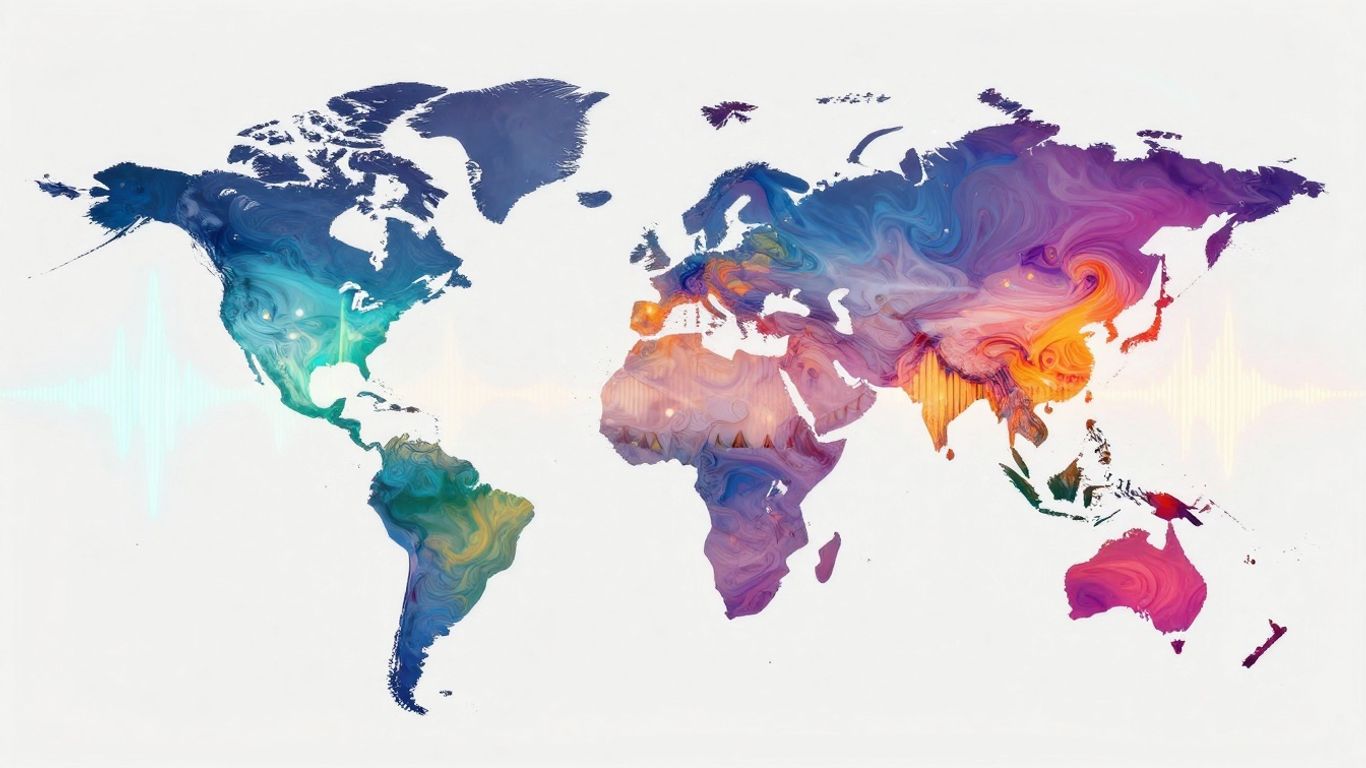
Remember when a song was a local sensation? Maybe it blew up on college radio or dominated the dance floor at a specific club. Those days feel like ancient history, right? Now, thanks to streaming, your favorite track can go from your headphones to, well, everywhere, practically overnight. It’s like the world suddenly got a lot smaller, and music is the messenger. Think about it: a song can pop off in Seoul, then boom, it's the jam in Rio de Janeiro the next day. This isn't magic; it's the power of a connected world.
The Amplification Effect
So, how does this global takeover actually happen? It’s a bit like a snowball rolling downhill. A song starts gaining traction in one place, maybe thanks to a popular playlist or a viral TikTok trend. Then, digital marketing firms jump in, working across different countries simultaneously. They help artists get their music in front of listeners everywhere, creating this massive wave. It’s this "amplification effect" where a little buzz in one corner of the globe gets magnified everywhere else, turning a regional hit into a worldwide phenomenon. It’s less about a romantic, organic discovery and more about a strategic, global push.
Navigating The New Music Landscape
This whole global music scene can feel a bit wild, honestly. It means artists and labels have to think differently. You can't just focus on your hometown anymore. You've got to be ready for your music to be heard by anyone, anywhere. This also means that what works in one culture might not land the same way in another, but streaming's reach means you can test the waters and see what sticks. It’s a constant dance between creating something authentic and understanding how it travels.
The way we listen has changed everything. From the length of songs to the very sounds we find appealing, streaming platforms are the new gatekeepers, and they’re telling us what they want, loud and clear. It’s a whole new ballgame for making music that connects.
Here’s a quick look at how this plays out:
- Global Reach: A song can become a hit in multiple countries at once.
- Data Influence: Streaming data shows what’s working, guiding future hits.
- Cross-Cultural Appeal: Melodic hooks tend to travel well across different cultures.
- Playlist Power: Curated playlists are major drivers of international success.
Complexity Reimagined: Melody Loops In The Digital Age
So, you've noticed how some songs just stick in your head, right? It's not magic, it's often a deliberate choice to keep things simple, especially in the melody department. Think about it: when you're scrolling through endless tracks, do you really have time for a musical puzzle? Probably not. The trend is leaning towards melodies that are easy to grab onto, like a catchy phrase you can’t shake.
Simplicity Sells: The Decreasing Complexity Trend
It turns out, research backs this up. Studies suggest that popular melodies have actually gotten less complex over the years, especially since the turn of the millennium. It's like music is saying, "Hey, I'm here to be enjoyed, not to make you think too hard." This isn't about dumbing down music; it's about making it more accessible. When melodies are simpler, they're easier to sing along to, easier to remember, and frankly, easier to just vibe with while you're doing a million other things. It’s a smart move for getting those streams, because a song you can hum after hearing it once is a song that gets played again.
Beyond Melody: Timbre Takes The Wheel
But wait, does simpler melody mean less interesting music? Not necessarily! It just means the complexity might be hiding somewhere else. With all the cool digital tools available today, producers can play around with timbre – the actual sound or color of an instrument. Think of it like this: if the melody is a simple drawing, the timbre is all the amazing colors and textures you use to fill it in. So, while the tune might be straightforward, the sounds themselves can be super intricate and engaging. It’s a different kind of musical richness.
The Art Of The Catchy Repetition
Repetition is your best friend when it comes to making a melody stick. It’s not just about repeating a note; it’s about repeating a feeling or a motif. This is where those melody loops really shine. They're designed to be memorable and to create that instant connection. Think of it as a musical anchor that keeps you tethered to the song. This is why understanding how to craft these loops is so important for anyone looking to make waves in the streaming world. It’s about finding that sweet spot between simplicity and sonic interest, and repetition is a huge part of that equation. You can see how data platforms like Chartmetric help artists understand what resonates with listeners.
The key is to make the melody loop feel like a natural part of the song, not just something tacked on. It should feel inevitable, like it was always meant to be there, guiding you through the track without you even realizing it.
In today's music world, making cool melodies is easier than ever. Think about how digital tools let artists create amazing sounds. It's like having a whole studio in your computer! Want to explore these new ways of making music? Check out our website for awesome beats and tools.
So, What's the Takeaway?
Alright, so we've basically figured out that catchy, sing-songy tunes are king in the streaming world. It's all about grabbing you fast, keeping it simple, and sounding good even on your tinny phone speaker. Think of it like this: you've got a million songs at your fingertips, right? You're not gonna sift through a five-minute intro, are you? Nope. You want the good stuff now. So, the next time you're mindlessly scrolling and a song just hits you, remember this – it was probably crafted with your short attention span and cheap earbuds in mind. It's a wild ride, but hey, at least your playlist is probably sounding pretty sweet, even if it's a little predictable. Now go blast some tunes!
Frequently Asked Questions
Why are catchy melodies so important for songs on streaming platforms?
Think about it: you have tons of songs to choose from, right? For a song to grab your attention fast, it needs a super catchy part, usually a melody, right at the beginning. Since people often decide if they like a song in the first 30 seconds, a strong melody hook is key to keeping you from skipping it. It's like the song's first impression, and it has to be a good one!
How has the way we listen to music changed what songs sound like?
You probably listen to music on your phone or laptop speakers a lot, and those speakers aren't always the best. So, musicians are making songs that sound good even on smaller speakers. This means they might focus on sounds that pop out, like a clear melody, and maybe use less of the really deep bass that those speakers can't handle well. It's about making the music sound awesome wherever you are.
Are songs getting simpler because of streaming?
It might seem like songs are simpler, but it's more like the complexity has shifted. Instead of really complicated melodies, songs today often have really strong, repeating melodic hooks. Plus, other parts of the music, like the beats or the different sounds (called timbre), might be more detailed. So, it's not necessarily less complex, just different.
What role do algorithms and playlists play in song success?
Streaming services use smart computer programs (algorithms) to figure out what you like. They then put songs into playlists based on that. If your song gets added to a popular playlist, tons of people will hear it, which can make it a big hit. It's like getting a recommendation from a trusted friend, but that friend is a computer.
How does streaming make music more global?
Before streaming, a song might be a big hit in one country but not known elsewhere. Now, with streaming, a song can become popular all over the world almost at the same time. It's like a small local hit can suddenly become a worldwide anthem because so many people can access it easily, no matter where they live.
Why do artists focus on melody loops so much now?
Melody loops are like the ear candy of a song. They're short, memorable musical phrases that repeat. Because people often listen for short bursts and are looking for something that sticks in their head, these loops are perfect. They make a song instantly recognizable and super catchy, which is exactly what you need to get noticed and keep people listening in the fast-paced world of streaming.


