

So, you've been hearing a lot about AI making music, right? It's kind of wild how fast this tech is popping up everywhere. From making songs sound like your favorite dead artists to completely new tracks that feel eerily familiar, AI vocals in music are definitely a thing now. But how good is it, really? And can you even tell if it's a person or a program singing? Let's break down what's happening with AI vocals in music and what it might mean for artists and listeners.
Key Takeaways
- AI can now create vocals that sound remarkably like famous singers, blurring the lines between human and machine performances.
- Spotting AI-generated music is getting harder, like a digital game of cat and mouse, because the AI keeps getting better.
- AI learns to sing by using complex systems like GANs, where one part of the AI tries to fool another, making the output more human-like.
- Your own voice could be cloned by AI, raising questions about ownership and who controls your digital sound.
- Technology exists to create digital fingerprints for music, helping to identify AI-generated content and protect artists' rights.
The Rise of the Robot Crooner: AI Vocals Take Center Stage
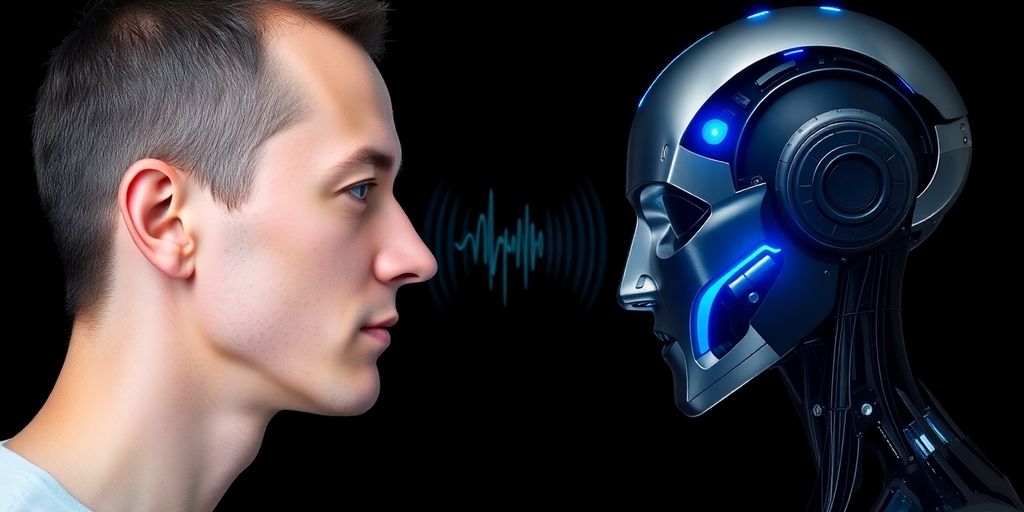
So, you’ve probably heard those wild AI-generated songs floating around the internet, right? It’s like someone took your favorite artist, fed them into a super-smart computer, and out popped a brand new track. We’re talking about everything from Kurt Cobain belting out “Song 2” to Paul McCartney crooning “Piano Man.” And don’t even get me started on that “Heart on My Sleeve” track with AI Drake and The Weeknd – millions of views before it vanished! It’s pretty wild how good this tech has gotten, and honestly, it’s making a lot of musicians and fans scratch their heads. Is this the future of music, or just a really fancy karaoke machine?
From Cobain to MJ: When AI Gets Vocal
It’s kind of mind-blowing, isn't it? Suddenly, you’ve got AI voices sounding eerily like legendary singers. Think about it: a computer program can now mimic the unique vocal stylings of artists we grew up with. It’s like having a digital time machine for music, but instead of just playing old songs, it’s creating new ones with familiar voices. This isn't just a novelty anymore; it's a whole new way music is being made and consumed.
Ghostwriter977's Viral Hit: A New Era Dawns
Remember that song “Heart on My Sleeve”? Yeah, the one with the AI-generated Drake and The Weeknd vocals that blew up online? That track really showed us what’s possible. It racked up millions of plays before getting pulled, proving that AI can create music that’s not just listenable, but genuinely popular. This moment felt like a big shift, a sign that AI is no longer just a tool for tech geeks but a serious player in the music scene.
The Existential Jukebox: AI's Impact on Music's Future
This whole AI music thing brings up some big questions. What does this mean for artists? Who owns the copyright when a song is made by a machine? Can you even get sued if your voice gets cloned without permission? The music industry is definitely in uncharted territory, trying to figure out how to handle these new creations. It’s like we’ve opened Pandora’s digital box, and now we’re all trying to make sense of what’s inside.
Can You Spot the Synth-Singer? The AI Detection Dilemma
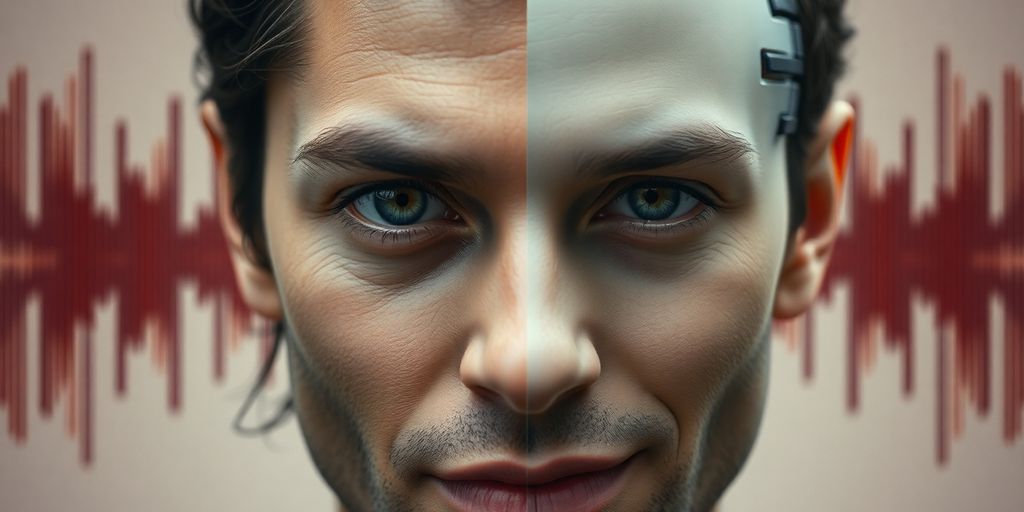
So, you’ve heard that AI-generated song that sounds exactly like your favorite artist. Pretty wild, right? But here’s the million-dollar question: can you actually tell if it’s the real deal or just a clever digital mimic? It’s like a musical version of the Turing Test, where the AI is trying its best to fool you into thinking it’s a human crooner. And honestly, these AI bots are getting really good at it.
From Cobain to MJ: When AI Gets Vocal
Remember those early AI attempts? They were a bit like a toddler trying to sing opera – you could tell something was off. Maybe the rhythm was a little wonky, or the voice had this weird, metallic edge. Think of those AI art pieces with an extra finger or mismatched earrings; it was the audio equivalent of that. But just like those AI artists learned to draw hands, AI singers are learning to smooth out their rough edges. What was once a dead giveaway is now becoming a subtle whisper, and soon, it might be completely silent.
Ghostwriter977's Viral Hit: A New Era Dawns
Take that viral hit, "Heart on My Sleeve," featuring AI-generated vocals of Drake and The Weeknd. Millions of views, right? Before it got pulled, it showed us that AI isn't just dabbling in music; it's making waves. It’s the kind of thing that makes you wonder if your favorite artist’s next hit might have been co-written by a silicon brain. It’s exciting, a little scary, and definitely changes the game.
The Existential Jukebox: AI's Impact on Music's Future
This brings us to the big picture. Is AI a friend, a foe, or just a really talented new collaborator? We're talking about songs that sound like they were sung by legends who are no longer with us, or even your own voice cloned for a catchy jingle. It’s a whole new world of possibilities, but it also opens up a can of worms regarding ownership, ethics, and how we even define music anymore. The lines are blurring faster than a poorly mixed synth line.
The Turing Test for Tunes: Is It Human or Hype?
So, how do we even begin to tell? It’s a constant game of cat and mouse. AI developers train their models to avoid the very tells that we might use to spot them. They’re essentially teaching the AI to be less robotic. It’s like trying to catch a ghost – the more you think you’ve got a handle on it, the more it changes shape.
Beyond the Extra Finger: AI's Evolving Artistry
Think about it: a few years ago, AI art had obvious flaws. Now? Not so much. The same is happening with music. What used to be a tell-tale sign of AI – maybe a weird vocal inflection or an unnatural pause – is being ironed out. The AI learns from its mistakes, and its mistakes are becoming fewer and farther between. It’s a race to see who can adapt faster: us spotting the AI, or the AI getting better at hiding.
The Cat-and-Mouse Game of AI Detection
Because it’s getting so hard to tell the difference, the music industry is looking for new ways to keep track. Think of it like digital watermarking, but for sound. Technologies are being developed to create a unique
Unmasking the Machines: How AI Learns to Sing
So, how does this digital mimicry actually work? It’s not magic, though it can feel like it sometimes. Think of it like teaching a kid to sing, but instead of a patient parent, you’ve got some seriously clever computer programs. The main players in this game are often called Generative Adversarial Networks, or GANs for short. Imagine two AIs playing a game: one is the "artist" trying to create a song, and the other is the "critic" trying to figure out if it sounds like a real human singer or, well, a robot.
Generative Adversarial Networks: The AI's Singing Coach
These GANs are pretty wild. You feed the "artist" AI a ton of real music – like, all the songs you can think of. Then, the "critic" AI listens to both the real stuff and what the "artist" AI churns out. If the "critic" can easily spot the fake, the "artist" has to go back to the drawing board and try again, learning from its mistakes. It’s like a never-ending cycle of practice and critique. The goal is for the "artist" AI to get so good that the "critic" AI can’t tell the difference anymore. This constant back-and-forth is how AI learns to avoid those tell-tale robotic sounds.
Spectrograms and Synthetics: The Technical Tell-Tales
How do these AIs actually learn what sounds human? Well, they look at more than just the sound waves. They often analyze something called a spectrogram. Think of a spectrogram as a visual map of sound, showing pitch, loudness, and time. Human voices have subtle patterns and imperfections in these maps – maybe a slight waver, a breathy intake of air, or a unique way a vowel is formed. AI is trained to recognize these tiny visual cues. If an AI-generated vocal has a spectrogram that looks too perfect, or has weird, unnatural patterns, that’s a big red flag for the "critic" AI. It’s like spotting an extra finger on a digitally altered photo – it just doesn’t look right.
Training AI to Avoid the 'Robotic' Riff
So, the AI is learning to sing, but how does it avoid sounding like it’s gargling marbles? It’s all about refining those subtle details. The "critic" AI flags anything that sounds off – maybe a note held a little too long, a strange vibrato, or a lack of natural breath sounds. The "artist" AI then adjusts its output to smooth out these rough edges. It’s a process of trial and error, but with a lot more data and a lot less actual singing. The aim is to make the AI’s vocal output so convincing that you’d swear it was a person belting it out, not a bunch of algorithms working overtime.
Your Voice, Their Song? Navigating AI Voice Cloning
Ever thought about hearing your own voice singing your favorite tune, but, you know, better? Well, AI voice cloning is making that a weirdly real possibility. It’s pretty wild – you can feed a machine a short audio sample, maybe just 30 seconds of you talking, and BAM! It can then churn out pretty much anything you want in your voice. Think of it like a digital puppet master, but for your vocal cords.
Clone Wars: Real Voices, AI Replicas
This is where things get a bit spooky. Companies are developing AI that can mimic voices with scary accuracy. They train these models on existing audio, and suddenly, you’ve got an AI that sounds just like a famous singer, or even, potentially, you. It’s not just about making a quick soundbite; these are sophisticated replicas that can sing, talk, and deliver lines with uncanny resemblance. It’s like having a digital twin for your voice, ready to perform on command.
The 30-Second Soundbite: Creating Your AI Doppelgänger
So, how easy is it to make your own AI voice clone? Turns out, not that hard. You might only need a small snippet of audio – like a voicemail or a quick recording – to get started. This means that with just a little bit of your voice data, someone could create an AI version of you. Imagine sending a voice message, and it’s actually your AI clone saying it, perfectly mimicking your tone and style. It’s a bit like having a personal voice assistant that’s actually you, but without the actual you having to do all the talking.
Ethical Echoes: Who Owns Your AI-Generated Voice?
This is the big question, right? If an AI creates a song using a cloned version of your voice, who gets the credit? Who gets the cash? Right now, the legal landscape is pretty foggy. The US Copyright Office, for example, has said that purely AI-generated works aren't copyrightable. But what about when your voice is used? It opens up a whole can of worms about consent, ownership, and likeness. It’s a digital Wild West out there, and figuring out who owns what when it comes to AI voices is a challenge we’re all going to be dealing with.
Here’s a quick rundown of the issues:
- Consent: Did you agree to have your voice cloned and used?
- Ownership: If an AI sings a hit song in your voice, who owns that recording?
- Likeness: Can you sue if someone uses your voice for something you wouldn’t approve of?
- Royalties: If your AI voice makes money, do you see any of it?
The Digital Fingerprint: Protecting Your Sound in the AI Age
So, you've heard about AI making songs that sound like your favorite artists, right? It's wild. One minute you're listening to what sounds like Kurt Cobain singing "Song 2," and the next, it's Paul McCartney belting out "Piano Man." Pretty wild stuff, and honestly, a little unsettling if you're a musician. How do you even begin to protect your own sound when AI can mimic it so well? It's like trying to put a lock on a ghost.
Automated Content Recognition: The New Music Detective
Think of Automated Content Recognition (ACR) as your music's personal bodyguard. It's a tech that scans uploaded music and compares it to a massive library of existing songs. If it finds a match – even if it's just a melody or a vocal snippet – it flags it. This is super handy for spotting when someone's used your track, or worse, an AI version of your voice, without permission. It’s like having a digital detective on the case, 24/7.
Tagging the Tracks: Identifying AI's Footprint
This is where things get a bit more technical, but stick with me. AI models, especially the fancy ones called Generative Adversarial Networks (GANs), are trained to sound human. They have a
AI in Music: Friend, Foe, or Future Collaborator?
So, where does all this leave us? Is AI the ultimate bandmate, a sneaky sound thief, or just the next big thing in music production? Honestly, it feels like all three, depending on who you ask and what tune you're listening to. You've probably heard those viral tracks where AI-generated voices of famous singers belt out new songs – it's wild, right? One minute it's Kurt Cobain singing "Song 2," the next it's Michael Jackson doing a Rickroll. It’s pretty mind-blowing how good these AI voices are getting, and it’s definitely shaking things up.
Human-Assisted Harmony: AI as a Songwriting Sidekick
Think of AI not just as a replacement, but as a super-powered assistant. It can help you brainstorm lyrics, suggest chord progressions, or even generate backing tracks. It’s like having a tireless, infinitely creative collaborator who never complains about late-night sessions. You can feed it a melody, and it might spit out a dozen variations you’d never have thought of. It’s all about using AI to push your own creative boundaries, not replace your unique sound.
The Copyright Conundrum: Who Owns AI-Generated Tunes?
This is where things get messy, like trying to untangle headphone cords. If an AI creates a song, who actually owns it? The person who prompted the AI? The company that built the AI? The original artists whose voices might have been mimicked? Right now, in the US, AI-generated music isn't copyrightable. But the lines are blurring faster than a poorly mixed track. It’s a legal minefield, and courts are still figuring out the rules of engagement.
Monetizing Melodies: Making Bank in the AI Music Economy
Okay, so how do you actually make money when AI is involved? If you're using AI to create unique tracks, you can license them like any other music. But what about those AI voice clones? That’s trickier. If you’re an artist, you might want to keep an eye on how your voice is being used. Companies are developing tech to track AI-generated content, kind of like a digital fingerprint. It’s a new frontier for earning, and you’ll want to stay sharp to make sure you’re getting your fair share.
The music industry is in a constant state of flux, and AI is just the latest wave. Instead of fearing it, think about how you can ride it. It’s a tool, and like any tool, its impact depends on how you wield it.
AI is changing how music is made. Is it a helpful tool, a problem, or a new partner for musicians? This technology can help you create amazing sounds and overcome creative blocks. Want to explore how AI can boost your music-making? Check out our awesome loop kits on our website!
So, Can You Tell the Difference?
Alright, so we've been digging into this whole AI music thing, and let's be real, it's getting wild out there. It's like trying to spot a fake designer bag on a busy street – sometimes it's obvious, but other times, wow, it's a close call. We've seen AI voices doing a pretty convincing job of sounding like, well, us! Or at least, like famous people. It’s kind of cool, kind of creepy, and definitely makes you wonder what’s next. For now, spotting the difference might still be possible if you listen super closely, but don't be surprised if AI keeps getting better. It’s a fast-moving train, and we’re all just along for the ride, trying to figure out what’s real and what’s just a really good imitation. Keep your ears open, folks!
Frequently Asked Questions
How can you tell if a song is made by AI or a real person?
Imagine you're trying to guess if a song was made by a person or a computer. At first, it might be easy to tell – maybe the voice sounds a bit weird or there's a strange beat. But as AI gets better, it's like a game of tag where the AI keeps getting sneakier. Soon, it'll be super tough, maybe even impossible, to know for sure just by listening.
How does AI learn to make music that sounds so real?
Think of it like this: AI learns to sing by practicing a lot. It has a 'teacher' AI that tries to catch its mistakes, and the 'student' AI learns from those mistakes to sound more human. It's like practicing scales until you get them perfect!
What is AI voice cloning and how does it work?
You know how some apps let you change your voice? AI voice cloning is like that, but way more advanced. You can give it a short clip of someone's voice, and it can create new sentences or songs in that exact voice. It’s pretty wild!
Who owns the music if AI helps make it?
This is a tricky question! Right now, in the U.S., if a song is made entirely by AI, it can't be copyrighted. But if a person uses AI to help them make music, it gets blurry. It's like trying to figure out who gets credit when a whole team works on a project.
How can we identify AI-generated music so it doesn't get mixed up with human music?
It's like putting a secret invisible tag on the music. Technology can create a unique 'fingerprint' for a song. Then, when that song pops up somewhere else, like in a video online, the system can recognize it and say, 'Hey, this sounds like that AI song!'
Can AI be a helpful tool for musicians?
It's like having a super-smart assistant for making music. AI can help you come up with song ideas, write lyrics, or even create backing tracks. So, instead of replacing musicians, it can be a cool tool to help them create even better music.


