

So, you're making beats and want to get your music out there. That's awesome. But here's the thing: just having killer tracks isn't always enough. You've gotta connect with people. Think of producer networking as your backstage pass to the music world. It's how you find collaborators, get your work heard, and basically, make things happen. It might sound a bit daunting, but honestly, it's mostly about building genuine connections. Let's break down how you can get better at it.
Key Takeaways
- Use social media consistently to show off your work and connect with others. It's a low-cost way to build your brand and find new fans or collaborators.
- Jump into online communities like Reddit forums or music newsletters. Finding your niche group makes producer networking easier and more relevant.
- Show up to events like open mics or beat battles. These are great spots to meet other artists and producers face-to-face, even if you're not performing.
- Focus on building real relationships, not just making quick deals. Support other artists, check in on your friends, and offer help before you ask for it.
- Get your Electronic Press Kit (EPK) and your 'link in bio' sorted. Having these tools ready makes you look professional and makes it easy for people to find out more about you.
Mastering The Art Of Producer Networking
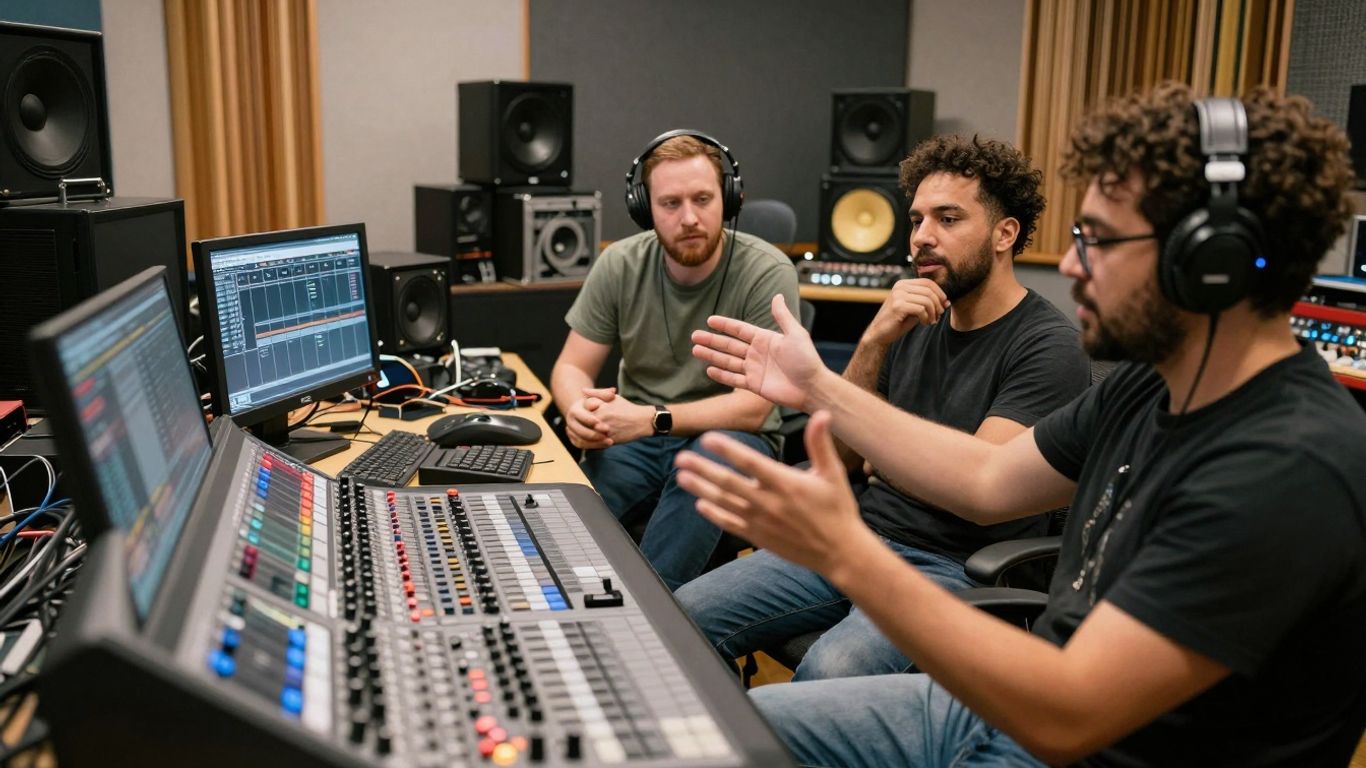
Alright, let's talk about the not-so-secret sauce that makes producers go from 'who' to 'OMG, I need them on my track!' It's networking, my friend. Think of it less like a chore and more like building your own personal music Avengers Assemble. You've got the beats, the sounds, the magic – but getting that out into the world? That’s where your network comes in. It’s not just about knowing people; it’s about building genuine connections that can actually help you and them grow.
Why Producer Networking Is Your Secret Weapon
Look, making dope music is only half the battle. The other half is making sure people actually hear it, and more importantly, that the right people hear it. Your network is your direct line to opportunities, collaborations, and even just getting honest feedback. It’s like having a backstage pass to the entire music industry. Without it, you're just shouting into the void, hoping someone with a big megaphone hears you. With it, you've got a whole crew ready to amplify your sound.
Setting Your Sights: Goals For Your Network
Before you start handing out business cards like they're free samples, take a sec. What do you actually want from your network? Are you looking for singers to hop on your beats? Maybe you need a mixing engineer who won't charge an arm and a leg? Or perhaps you're aiming to get your tracks placed in films? Knowing your goals helps you focus your efforts. It’s like planning a road trip – you wouldn't just start driving, right? You need a destination.
Here are a few things to think about:
- Collaboration: Who do you want to make music with? Vocalists, other producers, instrumentalists?
- Exposure: How can people help get your music heard? Think DJs, playlist curators, bloggers.
- Skill Development: Who can teach you something new or help you improve your craft? Mentors, experienced engineers.
- Business: Are you looking for managers, label contacts, or sync agents?
Don't just collect contacts like Pokémon cards. Aim for meaningful interactions that serve a purpose for both you and the other person. Quality over quantity, always.
Crafting Your Compelling Artist Story
So, you've got goals. Now, how do you tell people who you are and why they should care? This is your artist story. It’s not just your bio; it’s the narrative that makes you, you. What’s your vibe? What makes your sound different? Why do you make music in the first place?
Think about these points:
- Your Sound: What genre(s) do you play in? What's the overall feeling your music gives off?
- Your Uniqueness: What’s one or two things that make you stand out from the crowd?
- Your 'Why': What drives you? What message are you trying to send?
- Comparisons: Who are a couple of artists that your sound might remind people of (but don't say you're just like them!)?
Being able to sum this up quickly, like a mini-pitch, is super handy. You never know when you'll meet someone who could be a game-changer, and you want to be ready to make a good first impression.
Your Digital Domain: Online Producer Networking
Okay, so you've got the beats, the melodies, the whole sonic shebang. But how do you get people to actually hear it, especially when you're not hitting up every open mic night in town? Enter the internet, your digital playground. It's not just for scrolling through cat videos (though, let's be honest, those are important too). This is where you build your crew, find your collaborators, and get your name out there without even leaving your comfy chair. Think of it as your virtual studio lobby.
Conquer Social Media: It's Not Just For Selfies
Seriously, put down the selfie stick for a sec and think about what you're posting. Your social media is your digital storefront, your 24/7 open house. It's where people get their first impression of you and your sound. So, what should you be doing?
- Showcase Your Work: Post snippets of your beats, behind-the-scenes studio action, or even just cool sound design experiments. Make it interesting!
- Engage, Don't Just Broadcast: Don't just drop links and run. Comment on other producers' posts, share music you dig, and reply to people who comment on your stuff. Be a human, not a robot.
- Use the Right Platforms: Instagram is great for visuals and short clips, Twitter for quick updates and industry chat, and LinkedIn for more professional connections. Find where your people hang out.
Consistency is key here. You don't need to post five times a day, but try to keep a steady presence. It shows you're active and serious.
Dive Into Online Communities: Find Your Tribe
Beyond the big social media giants, there are actual communities built around music production. These are goldmines for finding people who get what you do. Think Reddit forums like r/musicproduction or r/makinghiphop, or even Discord servers dedicated to specific genres or software. It's like finding your people at a massive, digital music conference.
- Be Helpful: See someone asking a question you know the answer to? Jump in! Share your knowledge. People remember those who help them out.
- Share Your Progress (Wisely): Post your tracks for feedback, but be open to constructive criticism. It's how you grow.
- Listen and Learn: Pay attention to what others are doing. You might discover new techniques or get inspired for your next project.
Remember, these online spaces are about building relationships, not just spamming your latest demo. Be genuine, be curious, and be a good digital citizen.
Optimize Your Online Presence: Make Them Click
So, you've got people checking out your social media or finding you in a forum. What happens next? They're going to want to hear more. This is where your online presence needs to be on point. Think of your profile links as your digital handshake.
- Linktree or Similar: Use a service that lets you link to multiple places – your SoundCloud, Spotify, website, EPK, whatever. Make it easy for people to find everything.
- Clean Up Your Profiles: Make sure your bio is clear, concise, and tells people what you do. Use a good profile picture – maybe not a blurry selfie from five years ago.
- Have a Portfolio Ready: Whether it's a simple SoundCloud page with your best tracks or a full-blown website, have a place where people can easily listen to your music. Your music should be front and center.
Show Up And Shine: In-Person Producer Networking

Alright, so you've got the beats, you've got the drive, but how do you get your sound out there in the real world? It's time to ditch the screen for a bit and actually be somewhere. Think of it like this: your music is the appetizer, but showing up is the main course that gets people talking.
Hit The Open Mics: More Than Just A Stage
Open mics aren't just for singers trying to belt out a ballad. As a producer, this is your chance to scout talent, meet artists who need beats, and maybe even drop a hint about what you do. Stick around after the performances, chat with the performers, and compliment their set. You never know who might be looking for a producer to bring their songs to life. It’s a low-pressure way to get your name out there and hear what’s bubbling up in your local scene.
Beat Battles: Where Skills Meet Connections
These are intense, sure, but they're also goldmines for networking. You're literally in a room with other producers and artists who appreciate the craft. Even if you're not competing, just being there, watching, and cheering people on can lead to conversations. Stick around afterward, talk to the winners and losers alike. Everyone's buzzing from the energy, making them more open to chatting. It’s a vibrant environment to make friends and potential collaborators.
Support Your Peers: The Power Of Showing Up
Seriously, this is huge. Go to your friends' shows, their listening parties, their beat showcases. Don't just show up, actually be there. Engage with the music, talk to people, and be a positive presence. When you support others, they're way more likely to support you back. It builds a community, and in this industry, your community is your lifeline.
Remember, people remember how you make them feel. Being a supportive, positive force in your local music scene means you're not just another producer looking for a gig; you're part of the fabric. That kind of reputation travels faster than any demo tape.
Here’s a quick rundown of how to make the most of these events:
- Be approachable: Smile, make eye contact, and don't hide in a corner.
- Have your elevator pitch ready: Briefly explain what you do and what kind of artists you like to work with.
- Listen more than you talk: Ask questions about their music and their goals.
- Exchange contact info: Don't be shy about asking for a card or swapping social media handles.
- Follow up: Send a quick message the next day to say it was nice meeting them.
Building Bridges: Cultivating Real Relationships
Okay, so you've met some cool people. Awesome! But here's the thing: just swapping business cards or adding each other on social media isn't going to cut it. You gotta actually build something. Think of it like tending a garden, not just grabbing a bouquet.
Beyond The Transaction: Genuine Connections
Seriously, stop thinking about what someone can do for you right now. That's a one-way ticket to being 'that producer' nobody wants to talk to. Instead, get curious. Ask about their latest project, what music they're digging, or what challenges they're facing. People remember how you make them feel, not just what you can offer them.
- Ask open-ended questions: "What's inspiring you lately?" instead of "Can you mix my track?"
- Listen more than you talk. Like, way more.
- Find common ground beyond just music – maybe you both hate traffic or love a specific obscure band.
Building real connections takes time and effort. It's about showing up consistently, not just when you need a favor. Think long-term friendships, not just quick wins.
The Art Of The Follow-Up: Don't Be A Ghost
So you had a great chat at that beat battle or online forum. Now what? Don't let that connection fizzle out like a cheap vape. A simple follow-up message can make all the difference. It doesn't have to be a novel, just a quick note to say you enjoyed talking and maybe share something relevant you discussed.
Here's a quick follow-up cheat sheet:
- Within 24-48 hours: Send a personalized message. Reference something specific from your conversation.
- Suggest a next step (if appropriate): "Maybe we could grab a coffee next week?" or "I'll send over that link we talked about."
- Don't be pushy: If they don't respond right away, don't bombard them. Give it some space.
Offer Value First: Give To Get
This is the golden rule, folks. Before you even think about asking for anything, figure out how you can help them. Can you share their new track on your socials? Connect them with someone who might be a good fit for their project? Offer some constructive feedback on a demo (if they ask!)? Being the person who gives without expecting anything immediately in return builds serious goodwill. It shows you're a team player, not just a solo act looking for a handout. Plus, karma's a real thing in this industry – what goes around, comes around.
Essential Tools For Your Producer Networking Toolkit
Alright, so you've been out there, shaking hands (or maybe just awkwardly nodding) and dropping your beats. But how do you keep all those potential connections from turning into a digital dust bunny collection? You need a few trusty tools in your producer's belt. Think of these as your secret weapons for making sure people remember you and, more importantly, know where to find you when they need that fire track.
Your EPK: The Ultimate Digital Handshake
This is your digital business card, but way cooler. An Electronic Press Kit (EPK) is basically a one-stop shop for anyone who wants to know what you're about. It’s where you showcase your best work, tell your story, and give them all the deets without them having to dig through a million links. Your EPK should be polished, professional, and easy to navigate. Think of it as your first impression, so make it count!
What to cram in there:
- Your hottest tracks (obviously!)
- A killer bio that tells your story (keep it concise, nobody likes a novel)
- High-quality photos – you know, the ones that don't look like they were taken on a potato
- Any press mentions or accolades you've snagged
- Contact info (super important, right?)
Having a solid EPK ready to go means you're always prepared. Whether it's a quick email to a potential collaborator or a link you share after a great conversation, you're presenting yourself like a pro. It shows you're serious about your craft and your career.
Link In Bio: Your Digital Hub
Social media is great, but let's be real, you can't put everything in one post. That's where your "link in bio" comes in. It's your digital command center, directing traffic to all the important places. You can use services that let you list multiple links, so you're not just sending people to one spot. This is super handy for directing folks to your EPK, your latest releases, your website, or even your basic network tool kits if you're feeling particularly organized.
Know Your Network: Who To Connect With
Okay, so you've got your tools. Now, who are you actually trying to connect with? It's not just about collecting names; it's about building relationships. Think about:
- Other Producers: For collabs, sharing knowledge, or just commiserating about that one synth that won't cooperate.
- Artists: Singers, rappers, instrumentalists – they need beats, and you've got 'em!
- Engineers & Mixers: They're the wizards who make your tracks sound amazing.
- Labels & A&Rs: If you're looking to get your music heard on a bigger scale.
- Bloggers & Influencers: People who can help spread the word about your music.
Remember, networking isn't just about what you can get. It's about building a community. Be the person who offers help, shares opportunities, and genuinely supports others. That's how you build a network that actually works for you.
Navigating The Networking Landscape: What NOT To Do
Alright, let's talk about the stuff you really shouldn't do when you're trying to build your producer network. We all want to connect with cool people and make great music, but sometimes, we can accidentally shoot ourselves in the foot. Let's avoid those awkward moments, shall we?
Don't Be That Pushy Producer
Seriously, nobody likes feeling cornered or like they're just a stepping stone. When you first meet someone, resist the urge to immediately hit them with your demo, your business card, and a demand for a collaboration. It's like going on a first date and asking for marriage. Give people space to breathe and get to know you first. Think of it this way: you want to be remembered as that chill producer who's easy to talk to, not the one who hounds everyone on social media or at every single event. A little persistence is good, but a lot of it can make people want to block you.
The Golden Rule: Give Before You Get
This one's a biggie. It's super tempting to reach out when you need something – a feature, a mix, a connection. But flip that script! Before you ask for anything, think about what you can offer. Can you share their track on your socials? Can you give them some honest feedback on their work? Maybe you can help them promote an upcoming gig. Showing up for others without expecting anything back builds serious goodwill. It's about being a good community member first. You can check out some ideas on how to broaden your network and be more transparent about your intentions here.
Balance Is Key: Create And Connect
It's easy to get caught up in the networking hustle. You might feel like you need to be online 24/7 or attend every single event. But remember why you started making music in the first place: to create! If you spend all your time trying to meet people and none of your time actually making beats or writing songs, what will you have to show for it when that big opportunity does come along? You need to have dope music to back up all those connections. Find a rhythm that works for you, where you're actively building relationships and consistently producing your best work. It’s a marathon, not a sprint, and you need fuel for both parts of the race.
When you're trying to figure out the world of networking, it's easy to make mistakes. Think of it like learning to ride a bike – you might wobble a bit at first! But don't worry, we've got your back. We've put together some tips on what to avoid so you can connect with confidence. Want to learn more about making great connections? Visit our website for all the details!
So, Go Forth and Connect!
Alright, producers, you've got the lowdown on making those connections happen. Remember, it's not just about the beats you drop, but the people you meet. Don't be shy – put yourself out there, be genuine, and hey, maybe even offer someone a virtual cup of coffee. Building your network is like building a dope track: it takes time, a bit of hustle, and a whole lot of good vibes. Now go make some noise (and some friends)!
Frequently Asked Questions
Why is meeting people so important for producers?
Think of it like this: making cool beats is awesome, but if no one knows you or your music, it's hard to get anywhere. Networking is all about building connections with other musicians, people in the industry, and fans. These connections can help you get your music heard, find people to work with, and generally grow your career. It's like building a team that believes in your sound!
How can I find other producers or artists to connect with?
You can find your people in a bunch of ways! Online, jump into music forums or groups on social media like Reddit or Facebook. In real life, go to open mic nights, beat battles, or local shows. Even just showing up to support other artists at their gigs is a great way to meet people. Don't be shy, introduce yourself!
What should I do after I meet someone new?
Don't just leave them hanging! A simple follow-up is super important. Send them a quick message a day or two later, maybe on social media or email. Remind them who you are, mention something you talked about, and say you'd like to stay in touch. It shows you're serious about building a connection.
Should I always ask for something when I network?
Definitely not! The best way to build real relationships is to offer help first. Think about what you can do for them. Maybe you can share their music, give them some feedback on a track, or introduce them to someone you know. When you give first, people are much more likely to want to help you out later.
What's an EPK and why do I need one?
An EPK stands for Electronic Press Kit. It's like your music resume or digital business card. It usually includes your bio, your best music tracks, photos, and any cool achievements. When someone important, like a blogger or a label person, is interested, you can send them your EPK so they can quickly learn all about you and your music.
Is it okay to promote myself a lot when I network?
It's good to let people know what you do, but don't be that person who only talks about themselves or constantly asks for favors. Networking is about making friends and building relationships. Be genuine, listen to others, and find a good balance between sharing your work and supporting the people you meet. Nobody likes a pushy salesperson!


